

What Every Rider Should Do to Preserve Evidence After a Motorcycle Crash in Saratoga Springs
The single most important thing you can do after a motorcycle crash in Saratoga Springs is start preserving evidence immediately, before memories fade, road conditions change, and physical proof disappears. Unlike car accidents, motorcycle injury cases carry a unique burden: insurers and defense attorneys frequently argue that the rider was reckless or at fault. The evidence you collect in the hours and days after a crash can determine whether you recover full compensation or whether the other side successfully shifts blame onto you. Under New York’s pure comparative negligence rule (CPLR §1411), your damages are reduced by whatever percentage of fault a jury assigns to you, making evidence of the other driver’s negligence critical to your recovery.
If you or a family member suffered a serious motorcycle injury in the Saratoga Springs area, Hacker Murphy can help you build a strong claim. Call 518-274-5820 or reach out online to discuss your case.
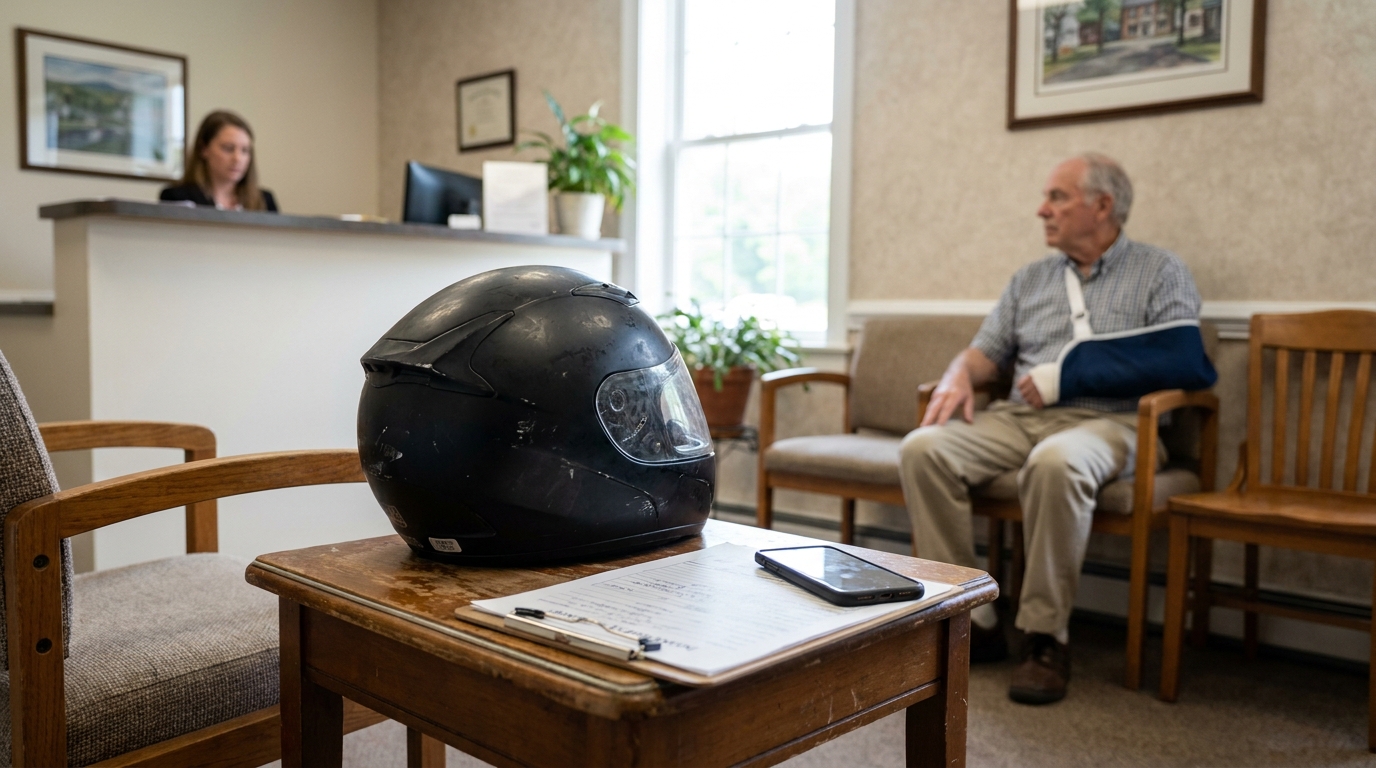
Why Evidence Disappears Faster in Motorcycle Crash Cases
Motorcycle accident scenes degrade quickly, especially on busy Saratoga County roads during riding season. Skid marks wash away with rain. Debris gets swept up by road crews. Witnesses leave without providing contact information. In many Capital Region motorcycle crash cases, the most valuable evidence disappears within 48 hours.
Seriously injured riders are often transported by ambulance and never get the chance to document the scene themselves. A motorcycle accident attorney in Saratoga Springs can dispatch an investigator to the scene, send preservation letters to prevent the at-fault driver’s insurer from destroying vehicle data, and request surveillance footage before it is overwritten.
💡 Pro Tip: If a family member or friend can get to the crash scene while you are receiving medical care, ask them to photograph the roadway, traffic signals, vehicle positions, and any visible debris. Time-stamped photos from a smartphone are powerful evidence.
At the Scene: Critical Steps for Documenting a Motorcycle Accident in New York
If your injuries allow it, what you do at the scene creates the foundation for your entire claim. Here is what matters most:
-
Call 911 and request a police response. A police report provides an official record including scene details, parties involved, and any citations issued.
-
Photograph everything. Take wide shots of the intersection or road, close-ups of vehicle damage, your motorcycle’s position, pavement gouges, traffic signs, and road hazards. Include photos of the other driver’s license plate and insurance card.
-
Collect witness contact information. Names, phone numbers, and brief descriptions of what they saw. Witness accounts become critical when the other driver changes their story.
-
Do not discuss fault. Anything you say at the scene can be used to argue comparative negligence later.
💡 Pro Tip: Turn on your phone’s location services before taking photos. GPS-tagged, time-stamped images are difficult to challenge and can corroborate your account of where and when the crash occurred.
Preserving Physical and Medical Evidence After You Leave the Scene
Your medical records and physical evidence become the backbone of proving both causation and injury severity. Seeking prompt medical evaluation creates a documented link between the accident and your injuries. Delays in treatment give insurers their favorite argument: that your injuries were pre-existing or unrelated to the crash.
What Medical Evidence to Keep
Save every piece of documentation from your medical treatment, starting with the emergency room visit. This includes ambulance records, imaging studies, surgical reports, physical therapy notes, and prescription records. If your doctor discusses a permanent limitation or ongoing deficit, ask that it be documented. Detailed clinical findings support claims; vague notes hurt them.
Preserving Your Gear and Motorcycle
Do not repair or discard your motorcycle, helmet, or riding gear until your attorney has documented their condition. A cracked helmet demonstrates impact force. Road rash damage on a jacket shows the rider was wearing recommended protective gear, countering defense arguments about rider carelessness. New York requires DOT-approved helmets, and documenting that your helmet met that standard helps defeat contributory negligence claims. Your motorcycle’s damage pattern can help an accident reconstruction professional determine speed and angle of impact.
💡 Pro Tip: Store your damaged gear in a dry, secure location and photograph each item from multiple angles. If your helmet has a DOT certification sticker, photograph that as well.
How a Motorcycle Accident Attorney in Saratoga Springs Builds Your Evidence File
An attorney does not just collect evidence; they build a narrative of negligence, causation, and damages that holds up against aggressive defense tactics. To establish a negligence claim in New York, you must prove four elements: duty, breach of duty, causation, and damages. Each element requires specific evidence.
|
Element |
What Evidence Supports It |
Common Defense Attack |
|---|---|---|
|
Duty |
Traffic laws, right-of-way rules |
Argues rider was in a zone where duty was shared |
|
Breach |
Police report, witness testimony, traffic camera footage |
Claims the driver acted reasonably under circumstances |
|
Causation |
Medical records, accident reconstruction |
Argues injuries were pre-existing or unrelated |
|
Damages |
Bills, wage documentation, life care plans |
Minimizes severity or disputes future losses |
The defense will try to attribute as much fault to the rider as possible. Under CPLR §1411, any fault assigned to you reduces your recovery dollar for dollar. Insurers regularly argue that the rider was speeding, failed to wear proper gear, or was difficult to see. Strong, early evidence collection is the best counter.
Accident Reconstruction and Digital Evidence
Some motorcycle crash cases require reconstruction to prove what happened. This is especially true at complex intersections or when the at-fault driver denies responsibility. If you need an accident reconstruction analysis for your motorcycle claim, your attorney can retain a qualified professional to analyze physical evidence, vehicle data, and scene measurements. Modern vehicles may contain event data recorder information capturing speed, braking, and steering inputs before a crash, and a preservation letter must be sent quickly to prevent data loss.
💡 Pro Tip: Check whether any nearby businesses, traffic cameras, or residential doorbell cameras may have captured the crash. Footage is typically retained for 30 to 90 days, though some smaller businesses and certain traffic camera systems may overwrite footage within days, so notify your attorney immediately so a preservation request can be sent.
The Statute of Limitations and Why Timing Matters for Evidence Preservation
New York gives you three years from the date of a motorcycle accident to file a personal injury lawsuit, but waiting to preserve evidence can destroy your case long before that deadline. Surveillance footage is often retained for 30 to 90 days, though some systems may overwrite footage within days. Cell phone records require a subpoena. Witnesses relocate or forget details. The three-year window is a filing deadline, not an evidence-preservation deadline.
In wrongful death cases or claims against government entities, shorter deadlines apply. Under General Municipal Law §50-e, a notice of claim against a municipality must be filed within 90 days, and the lawsuit typically must be commenced within one year and 90 days. Courts enforce these deadlines strictly.
💡 Pro Tip: Keep a personal journal documenting your pain levels, limitations, and emotional state each day after the crash. These notes can support claims for pain and suffering that medical records alone may not fully capture.
Frequently Asked Questions
1. Why are motorcycle accident claims treated differently than car accident claims in New York?
How does motorcycle exclusion from no-fault affect my claim?
Motorcycles are excluded from the definition of “motor vehicle” under New York’s no-fault insurance system, specifically Insurance Law §5102(f). This means you will not receive automatic first-party benefits for medical expenses and lost wages. The upside is that you can file a lawsuit directly against the at-fault driver without meeting the serious injury threshold required for car crash victims. The downside is that you bear the burden of proving all damages, making evidence preservation critical.
2. What if I was partially at fault for the motorcycle crash?
Can I still recover compensation under New York’s comparative negligence law?
Yes. New York is a pure comparative negligence jurisdiction, meaning your recovery is reduced by your percentage of fault rather than barred entirely. Even if a jury finds you 60% at fault, you can still recover 40% of your damages. However, every percentage point matters financially, and the evidence you preserve will directly influence how fault is allocated.
3. What types of evidence should I prioritize after a motorcycle crash?
Which evidence carries the most weight?
Medical records, scene photographs, the police report, and witness statements carry the most weight. Physical evidence from your motorcycle and gear, cell phone data, and any available video footage are also highly valuable. Begin preserving evidence as soon as possible, because much of it is time-sensitive.
4. How long do I have to file a motorcycle accident lawsuit in Saratoga Springs?
What is the filing deadline in New York?
The statute of limitations for personal injury claims in New York is generally three years from the date of the accident. However, claims against government entities carry significantly shorter deadlines, including a 90-day notice of claim requirement and a one-year-and-90-day lawsuit filing deadline. Do not confuse the filing deadline with the evidence-preservation timeline, which is much shorter.
5. Should I talk to the other driver’s insurance company before consulting an attorney?
What are the risks of giving a recorded statement?
Providing a recorded statement to the at-fault driver’s insurer before consulting an attorney can significantly harm your claim. Adjusters are trained to ask questions that elicit admissions of fault or minimize injury severity. Anything you say can be used to argue comparative negligence or undervalue your damages. Speak with an attorney before engaging with the opposing insurer.
Protect Your Claim by Acting Quickly
Evidence preservation requires immediate action after a motorcycle crash in Saratoga Springs. From photographing the scene and securing your damaged gear to obtaining medical records and preserving digital evidence, every step you take in the first hours and days strengthens your ability to prove negligence and recover the compensation you deserve. Motorcyclists face heightened scrutiny from insurers and juries, and the physical evidence that counters bias-driven arguments is often the most perishable.
If you suffered a serious injury in a motorcycle crash in the Saratoga Springs or greater Capital Region area, the team at Hacker Murphy is ready to help you protect your evidence and pursue your claim. Call 518-274-5820 or contact us today to schedule a consultation.