
What Insurers Really Mean When They Blame Your Helmet
Key Takeaways: In New York, the helmet defense is a damage-mitigation argument rather than a bar to recovery. CPLR § 1411’s comparative negligence rule reduces awards proportionally to the rider’s culpable conduct. New York requires approved helmets under Vehicle and Traffic Law § 381, so non-use or improper use can be offered as evidence, though courts generally limit this to damages rather than liability. Carriers build the argument through recorded statements, medical examinations, and biomechanical reports, asking about DOT certification, fit, and condition. The defense must tie the helmet issue to the specific head injury claimed, which is difficult when rotational forces or secondary impacts drove the outcome. Motorcyclists are generally not "covered persons" in New York’s no-fault system, affecting first-party benefits and the serious injury threshold. Claims stall when helmets, gear, and motorcycles disappear within two weeks. Preserved physical evidence, DOT documentation, safety-course records, and early witness statements help keep assigned percentages low, and helmet failure may shift cases toward product liability claims.
The helmet defense isn’t a case-ending argument; it’s a damage-reduction strategy. Under New York’s comparative negligence rule, questions about helmet use or type don’t bar recovery in most circumstances; they may only reduce the award proportionally. In Saratoga Springs motorcycle claims involving traumatic brain injury, skull fracture, or permanent cognitive limitation, that distinction matters enormously. A rider assigned responsibility may still recover at a reduced figure, and the fight becomes about keeping that percentage low.
If an adjuster has started asking pointed questions about your helmet, gear, or riding history, the team at Hacker Murphy can step in before those answers harden into a fault percentage. Call 518-274-5820 or contact us now to discuss your options.
How the Helmet Defense Motorcycle Injury Claim Argument Actually Unfolds
The helmet defense motorcycle injury claim strategy surfaces in three places: the recorded statement, the independent medical examination, and the defense expert’s biomechanical report. Adjusters rarely announce it. They build it by asking whether the helmet was DOT-approved, whether the chin strap was fastened, whether it had been dropped before, and whether the rider wore it on prior trips. Those answers later reappear in requests for mitigation or comparative-fault instructions at trial.
The argument rests on causation, not just conduct. The defense must connect the alleged helmet issue to the specific head injury damages claimed and prove the alleged deficiency increased the injuries sustained. A rider with subdural hematoma, orbital fracture, and documented permanent limitation may present a different causation picture than the defense assumes. Where rotational forces or secondary impact drove the injury, treating physicians and reconstruction professionals may show the outcome could have been similar regardless.
Where These Claims Commonly Stall
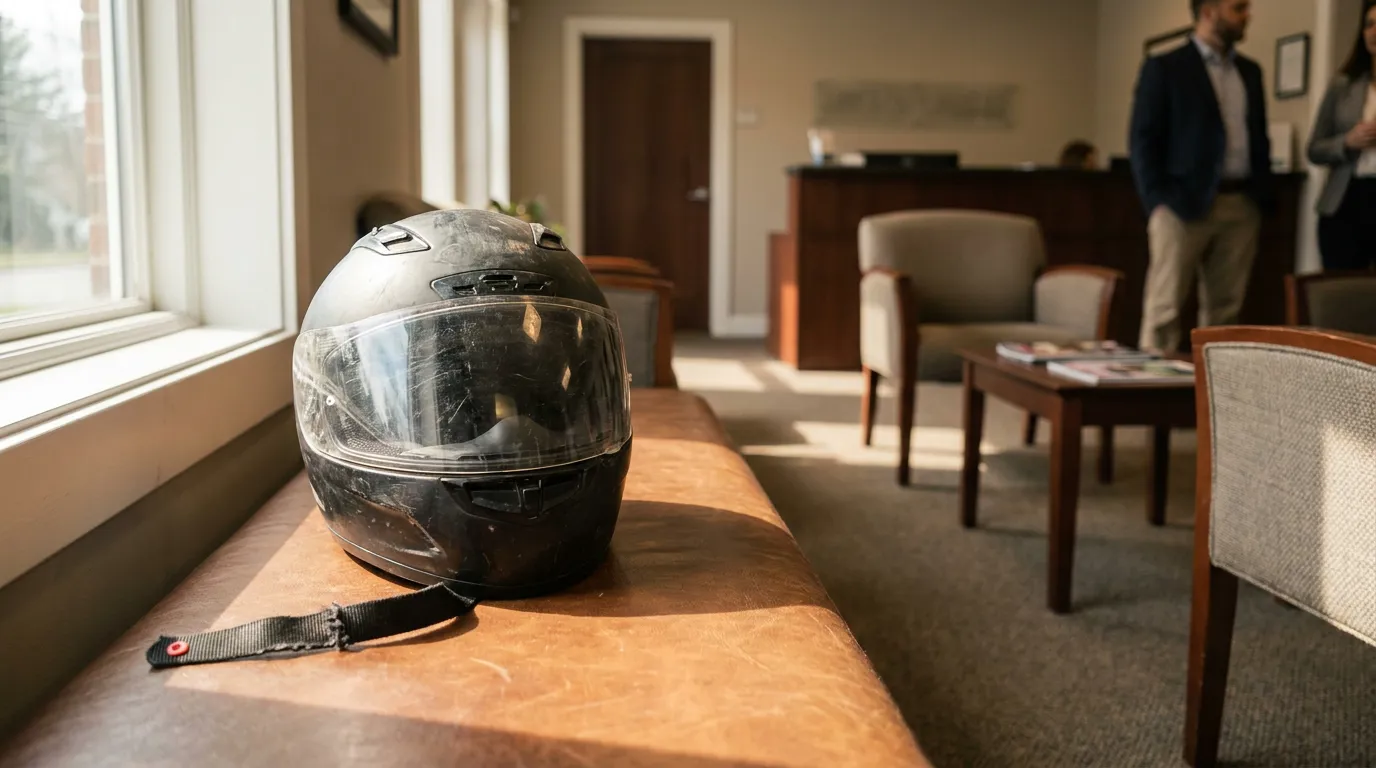
Claims stall when physical evidence disappears in the first two weeks. Hospitals discard helmets, tow yards crush damaged bikes, and gear ends up in garbage bags. Once that happens, riders argue from memory against defense professionals armed with reports. Reading guidance on how to preserve evidence after a crash early can change the entire negotiation trajectory.
💡 Pro Tip: Photograph the helmet from every angle before anyone moves it, and keep the original packaging or receipt. A DOT certification label is more persuasive when documented rather than described.
The Statutory Framework Behind Comparative Fault Helmet Arguments
New York’s comparative negligence rule is codified at CPLR § 1411(a), which provides that culpable conduct attributable to the claimant "shall not bar recovery," with damages instead "diminished in the proportion" that the claimant’s conduct bears to the total culpable conduct. A new CPLR § 1411(b), enacted as part of New York’s FY2027 budget and effective May 26-27, 2026, introduced a modified comparative negligence bar for personal injury actions subject to Insurance Law Article 51 (the No-Fault motor vehicle framework), barring recovery for plaintiffs found more than 50% at fault. However, because motorcyclists are generally not "covered persons" under Insurance Law Article 51, motorcycle accident claims are likely not subject to this new bar, and riders generally remain subject to New York’s traditional pure comparative negligence rule under CPLR § 1411(a), under which fault reduces but does not bar recovery. New York abolished the contributory negligence bar entirely in 1975 and has operated as a pure comparative negligence state since then. The new CPLR § 1411(b) primarily affects car, truck, and pedestrian claims involving covered persons under the no-fault framework. What also varies is whether a particular category of loss is recoverable, which turns on New York’s no-fault statutes, since motorcyclists occupy a distinct position within that structure.
When a jury assigns a percentage, the reduction is applied to damages "otherwise recoverable," meaning the verdict as a whole. Where a helmet argument is framed strictly as failure to mitigate, courts may limit the reduction to damages the defense proves were caused or aggravated by the helmet issue, which is why framing can translate into substantial dollar differences in catastrophic-injury cases.
| Issue | Governing Authority | Practical Effect on a Rider |
|---|---|---|
| Fault allocation | CPLR § 1411 | Reduces award proportionally; motorcyclists generally remain subject to pure comparative negligence under CPLR § 1411(a) |
| Application of the reduction | CPLR § 1411 | Applied to damages otherwise recoverable, not one category alone |
| Non-economic loss threshold | Insurance Law § 5104(a) | Applies between "covered persons"; motorcyclists are generally not covered persons for their own injuries |
| Helmet requirement | Vehicle and Traffic Law § 381 | Approved helmet required; non-use may be raised on damages |
| Collateral source reduction | CPLR § 4545 | Award may be reduced for indemnified costs, less premiums paid |
Why the Serious Injury Threshold Usually Is Not the Obstacle
The serious injury threshold works differently for motorcyclists than for drivers. Insurance Law § 5104(a) limits recovery for non-economic loss "except in the case of a serious injury," but this limitation applies only in actions between covered persons. Because motorcycle operators and passengers are generally excluded from no-fault coverage for their own injuries under Insurance Law § 5103(f), New York courts generally hold that an injured motorcyclist is not a covered person and need not meet the § 5102(d) threshold to recover pain and suffering.
Head injuries nonetheless need detailed proof. Imaging, neuropsychological testing, and treating-physician narratives often carry more weight than emergency room notes alone. Defense carriers frequently challenge both injury severity and the rider’s contribution simultaneously, and answering only one half can leave the claim exposed.
The No-Fault Wrinkle Unique to Motorcyclists
Motorcycles sit in an unusual place within New York’s no-fault system. Insurance Law § 5103(f) requires motorcycle owner policies to provide first-party benefits "to persons, other than the occupants" of the motorcycle. The practical consequence is that riders typically have no no-fault benefits for their own injuries and must look to health insurance and liability claims instead.
This baseline matters because it frames what the helmet defense attacks. Insurance Law § 5102(a) defines basic economic loss as up to fifty thousand dollars per person covering medical expenses plus lost earnings up to two thousand dollars monthly for three years, though this package generally isn’t available to injured motorcyclists. Because the rider’s medical bills and wage loss usually remain part of the liability claim, the comparative-fault fight can reach economic and non-economic damages alike.
The Second Reduction Riders Rarely See Coming
Comparative fault isn’t the only lever available to carriers. CPLR § 4545 allows courts to reduce awards where past or future costs "will, with reasonable certainty, be replaced or indemnified from any collateral source," offset by premiums the plaintiff paid over a two-year lookback. The statute excludes voluntary charitable contributions, though other sources carrying statutory liens are treated differently.
Building the Record That Defeats a New York Helmet Defense
Affirmative evidence of responsible riding can effectively counter fault arguments. Insurers sometimes lean on biases portraying motorcyclists as reckless, and a factual record may undercut that narrative faster than argument.
Evidence that may blunt these insurance defense tactics includes:
- Proof that the helmet and protective gear were DOT-approved, with labels, receipts, or photographs
- Safety-course completion certificates and training records
- A clean driving record showing no pattern of violations
- Maintenance records establishing the motorcycle was roadworthy
- Independent witness statements taken before memories fade
When the helmet itself failed on impact, the analysis may shift entirely. A cracked shell, separated liner, or strap that released under load may support a product liability claim against the manufacturer or retailer rather than a fault reduction against the rider. That’s another reason preservation of the helmet, gear, and motorcycle matters.
Frequently Asked Questions
1. Can a Saratoga County crash claim survive if I was not wearing a helmet?
In many cases, yes. New York requires an approved helmet under Vehicle and Traffic Law § 381, and violations may be offered as evidence, but under CPLR § 1411 a rider’s culpable conduct generally reduces damages proportionally rather than barring recovery. Because motorcyclists are generally not covered persons under Insurance Law Article 51, they typically remain subject to New York’s traditional pure comparative negligence rule, under which fault reduces but does not bar recovery. The outcome is often a lower net award.
2. Does the helmet defense apply when I was wearing a helmet?
It can. Carriers sometimes argue the helmet was improperly fastened, not DOT-certified, or ill-fitting. These arguments still require the defense to prove the alleged deficiency increased the specific injury claimed.
3. How does the serious injury threshold interact with a fault reduction?
They are separate questions. Insurance Law § 5104(a) governs whether non-economic loss is recoverable in suits between covered persons, a category generally excluding injured motorcyclists, while CPLR § 1411 governs how much of a qualifying award the rider may keep.
4. Will money raised by friends or a community fundraiser reduce my award?
Under CPLR § 4545, voluntary charitable contributions are not treated as a collateral source. Insurance payments are analyzed differently, and outcomes depend on the specific source, any lien or reimbursement right, and documentation.
5. What should I avoid saying to an adjuster about my helmet?
Avoid speculation. Statements guessing about fit, age, or prior drops may later reappear as fault evidence. A recorded statement to another driver’s insurer can sometimes be deferred until counsel reviews the file, though your own policy may impose cooperation duties.
What to Do Next After a Head Injury Crash
Move on evidence first, then medical documentation, then insurance conversations. Secure the helmet and gear, obtain the crash report, photograph the scene and motorcycle, and get a neurological evaluation even if symptoms seem manageable. Riders working with a motorcycle injury lawyer early may enter negotiations with a record already built rather than reconstructed months later.
The helmet defense is generally a percentage argument, not a verdict. New York’s comparative negligence framework can preserve rider legal rights even when fault is shared, and motorcyclists generally remain subject to the traditional pure comparative negligence rule under CPLR § 1411(a). Outcomes depend heavily on specific facts, medical proof quality, and how quickly physical evidence was preserved.
If a carrier is building a comparative fault helmet argument against you or a family member, Hacker Murphy is prepared to respond with evidence rather than assumptions. Reach the firm at 518-274-5820 or through the Hacker Murphy website to schedule a consultation.
Disclaimer: This content is for informational purposes only and is not legal advice. Every case is unique, and results may vary. Consult an attorney about your specific circumstances.