
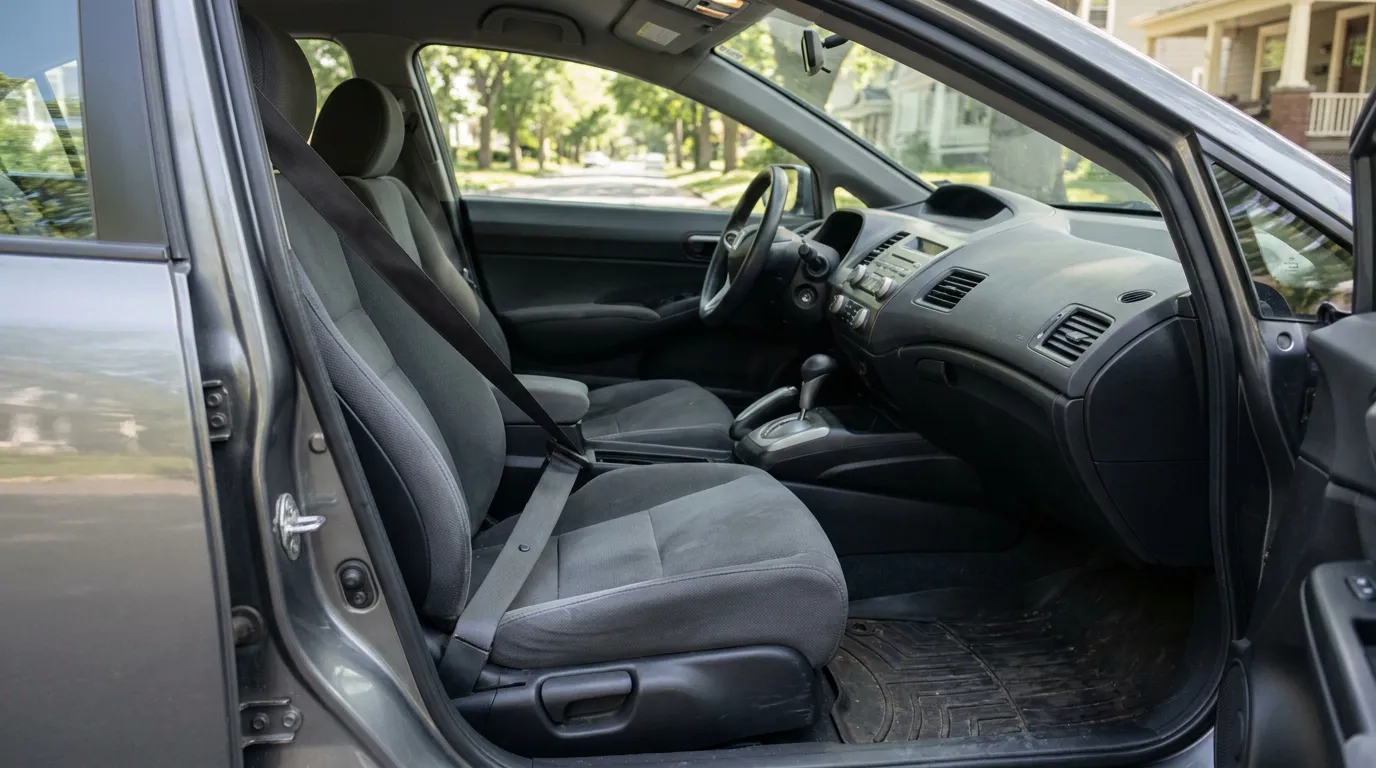
How Seat Belt Evidence Affects an Albany Crash Claim
Key Takeaways: Not wearing a seat belt may lower your Albany car accident settlement, but it generally does not bar your claim, because New York treats seat belt non-use as a damages issue, not a liability issue. Under VTL § 1229-c(8), non-use generally cannot be used on liability, and the defense can raise it only if it pleaded it as an affirmative defense, and then only to argue for reduced damages. The defense generally must prove, usually with expert testimony, that a seat belt would have prevented or lessened your specific injuries, which is often hard to show for fractures, intrusion injuries, or severe side impacts. New York’s pure comparative fault rule under CPLR § 1411 reduces your recovery in proportion to your own culpable conduct rather than eliminating it. Collateral source reductions, no-fault liens, and the serious injury threshold can also affect your net recovery. Preserving vehicle evidence, airbag module data, and clear medical records can help you push back on a seat-belt-based lowball offer.
Not wearing a seat belt may lower your Albany car accident settlement, but it generally does not erase your claim. Under New York Vehicle and Traffic Law § 1229-c(8), being unbuckled generally cannot be used to decide liability. The defense may raise it only to argue for reduced damages, and only if it pleaded seat belt non-use as an affirmative defense. Even then, it generally must prove that a seat belt would have prevented or lessened your specific injuries. For people with fractures, surgeries, or permanent injuries, that link is often much weaker than the adjuster suggests.
If an insurer is using seat belt evidence to justify a low offer, you should know where you stand before you respond. Hacker Murphy represents people seriously injured in crashes throughout the Capital District. You can call 518-274-5820 or contact us now to talk about your case.
The Seat Belt Defense in a New York Car Accident: What the Law Allows
New York treats seat belt non-use as a damages issue, not a liability issue. VTL § 1229-c requires front-seat occupants to wear seat belts, and since November 2020 it has also required back-seat occupants age 16 and older to buckle up, subject to limited exceptions. Younger children are covered by separate rules. Even so, § 1229-c(8) generally keeps a seat belt violation out of the question of liability. A driver who ran a red light on Central Avenue may still be found responsible for the crash, whether or not you were belted.
The defense instead uses seat belt evidence to argue for mitigation of damages. Since the Court of Appeals decided Spier v. Barker in 1974, New York courts have generally allowed a jury to reduce only the portion of damages that a seat belt would have prevented. That makes the defense much narrower than many injured people fear. The question is usually not "were you buckled?" but "what would have changed if you had been?"
How Pure Comparative Fault Shapes the Reduction
New York follows pure comparative fault, so your own culpable conduct may reduce your recovery but generally does not bar it. Under CPLR § 1411, a claimant’s culpable conduct "shall not bar recovery." Instead, it reduces damages in proportion to that conduct. Some states bar recovery once the injured person’s share of fault reaches 50% or 51%. New York does not. We explain the doctrine further in our guide on pure comparative negligence rules.
If a case goes to verdict, the court generally applies these reductions when it calculates the judgment. CPLR § 5041 directs the court to apply comparative fault under § 1411 and any applicable set-offs and credits. A percentage cut can therefore affect both how much you receive and how it is paid.
What Insurers Typically Argue About an Unbuckled Driver Claim
In our experience, adjusters raise seat belt non-use early, often before they have any medical proof to support it. It is a negotiating tool. The adjuster suggests a large discount without analyzing how your injuries happened, and hopes you accept it. The arguments we see most often include:
- Your head or facial injuries came from striking the steering wheel or windshield, which a belt would have prevented.
- You were partly or fully ejected, so the injuries were "self-inflicted."
- Your injuries do not meet the serious injury threshold, or a belt would have kept them below it.
- A police report box marked "no restraint" settles the question.
Each of these arguments depends on proof the defense often does not have. Police restraint entries are sometimes based on assumptions made at a chaotic scene. Belt webbing, buckle wear, airbag module data, and the injury pattern itself may tell a different story. In a severe side impact or rollover, a seat belt may have made little difference to a crushed pelvis or a broken femur.
The Serious Injury Threshold Overlay
Seat belt arguments are often combined with a serious injury challenge. Under Insurance Law § 5104(a), you generally cannot recover non-economic loss, such as pain and suffering, from another covered person unless you have a "serious injury" as defined in Insurance Law § 5102(d). Qualifying injuries may include fractures, significant disfigurement, and permanent consequential limitation of use of a body organ or member, among other categories. Strong medical documentation from the first emergency visit onward is one of your best protections.
💡 Pro Tip: Ask your treating surgeon to describe in your records how the injury happened, for example "lateral impact intrusion" or "dashboard knee strike." A clear mechanism of injury written at the time of treatment often carries far more weight than a theory put together months later.
How Seat Belt Evidence Must Be Proven in Court
The defense generally carries the burden of proving that a seat belt would have reduced your injuries. Courts generally require competent evidence, usually expert testimony from a biomechanical engineer, accident reconstructionist, or physician, that ties non-use to specific injuries. A general claim that "seat belts save lives" is not enough. If the defense cannot separate the injuries a belt would have prevented from those you would have suffered anyway, a jury may have no basis for reducing anything.
| Scenario | Likely Effect of Seat Belt Evidence |
|---|---|
| Defense never pleaded non-use as an affirmative defense | Generally inadmissible under VTL § 1229-c(8) |
| Rollover or ejection with injuries tied to ejection | Higher risk of a meaningful reduction |
| Severe side impact with intrusion injuries | Often limited or no reduction |
| Rear-end crash causing spinal disc injury | Causal link frequently disputed |
| Back-seat passenger under 16 | Belt rules differ; consult counsel |
Other Deductions That Affect Insurance Settlement Value
A seat belt reduction is not the only adjustment that can affect your net recovery. Under CPLR § 4545(a), after a verdict the court may reduce awards for medical costs or lost earnings paid by collateral sources such as health insurance. That reduction is generally offset by the premiums you paid for those benefits over the two years before the injury and by the projected future cost of keeping them. Life insurance and payments with a statutory right of reimbursement are generally excluded. Under § 4545(b), voluntary charitable gifts generally cannot be used to reduce your recovery.
No-fault liens also play a role. Under Insurance Law § 5104(b), a no-fault insurer that paid benefits generally has a lien on recovery from a non-covered person. In that situation, you generally cannot settle without the insurer’s written consent or court approval unless the settlement exceeds $50,000. If you do not sue the non-covered person within two years after the claim accrues, the insurer may pursue its own claim for the benefits it paid. This is not the general deadline for filing a personal injury lawsuit, which depends on the facts of your case.
How We Push Back on a Seat Belt-Based Settlement Reduction
Our approach starts with evidence, not argument. We work to preserve the vehicle before it is salvaged, because belt webbing and the buckle latch plate can show whether a belt was in use. We also request airbag control module data, which may record buckle status. Injury patterns in the medical file can often answer the causation question better than any witness can.
We also use discovery to find out what coverage is actually available. Under CPLR § 3101(f), once a lawsuit is filed, a defendant generally must provide the insurance policy, or a declarations page if you agree in writing, within 90 days after serving an answer. Knowing the limits can help you decide whether a seat-belt-based discount reflects real risk or is simply posturing.
Firm attorney Jim Hacker received the individual 2026 Justice For All Award from the Legal Aid Society of Northeastern New York. The award recognizes his commitment to access to justice across the region. We bring that same commitment to injured people facing well-funded insurers.
Frequently Asked Questions
-
Can I still recover if I was not wearing a seat belt in Albany?
Possibly, depending on the circumstances. New York’s pure comparative fault rule under CPLR § 1411 generally reduces damages rather than barring them, and seat belt evidence generally applies only to mitigation of damages.
-
Will the jury hear that I was unbuckled?
Generally only if the defendant pleaded non-use as an affirmative defense, and only on the question of damages, as provided in VTL § 1229-c(8).
-
How much can my settlement be reduced?
No fixed percentage applies. Any reduction depends on proof of which injuries, if any, a belt would have prevented.
-
Does the police report decide whether I was belted?
Not necessarily. The report is one piece of evidence, and vehicle inspection, crash data, and medical findings may contradict it.
-
Does seat belt non-use affect my no-fault benefits?
No-fault benefits are generally paid regardless of fault and are separate from your lawsuit. An attorney can best review how they interact with your claim.
Protecting Your Recovery After a Serious Albany Crash
Seat belt non-use is a defense insurers raise often, but New York law limits how they can use it. The defense generally must plead it, prove it with competent evidence, and connect it to specific injuries. If you suffered fractures, needed surgery, or face permanent limitations, careful evidence work may make a significant difference in your claim’s value.
If an insurer is citing your seat belt to cut your claim, talk with an attorney before you accept any offer. Hacker Murphy is ready to review your questions. You can learn more about our seat belt defense New York car accident lawyer services, call 518-274-5820, or schedule your consultation today.
Disclaimer: This content is for informational purposes only and is not legal advice. Every case is unique, and results may vary. Consult an attorney about your specific circumstances.