
Your Albany County Arraignment: What Actually Happens and What You Need to Know
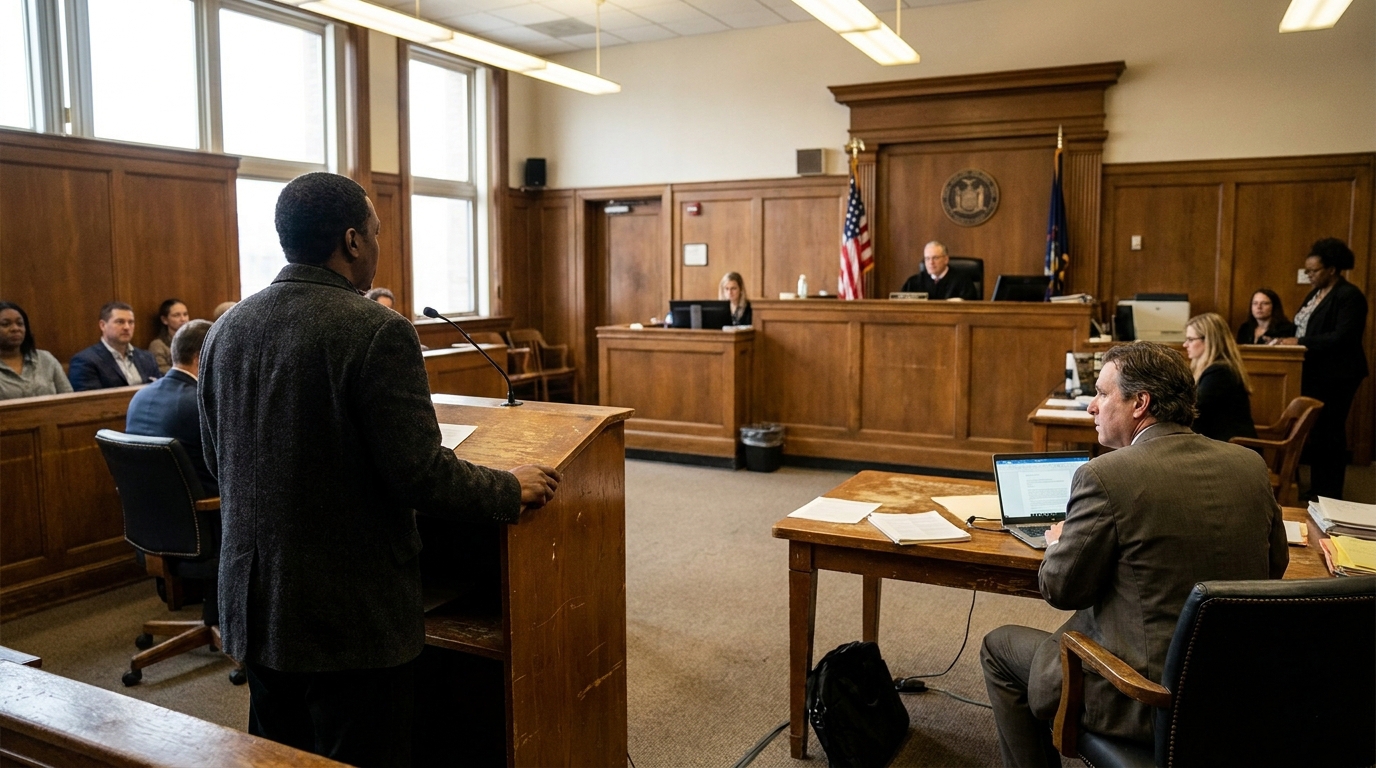
If you have been arrested or charged with a crime in Albany County, your arraignment is the first court appearance where a judge formally reads the charges against you, addresses bail, and informs you of your constitutional rights. Under NY CPL § 1.20(9), an arraignment is where the court acquires control over your person and sets the course of all further proceedings. This is not a trial, and you will not be asked to prove anything. But what happens in that courtroom can shape the entire trajectory of your case. Whether facing a misdemeanor DWI or a felony indictment, understanding the Albany County arraignment process gives you a real advantage in protecting your rights.
If you are facing criminal charges in Albany, NY, the defense team at Hacker Murphy is ready to stand with you. Call 518-274-5820 or reach out online to discuss your case right away.
Where Arraignments Take Place in Albany County
The court where your arraignment occurs depends on the type of charge and where you were arrested. Most misdemeanor and violation-level arraignments in the City of Albany happen at Albany City Court, located at 1 Morton Avenue, Albany, NY 12202. Felony matters that reach the indictment stage move to the Albany County Judicial Center at 6 Lodge Street, Albany, NY 12207. Albany City Court (Criminal Part) operates Monday through Friday from 8:30 AM to 4:00 PM (closed 12:30-1:30 PM for lunch), while the Albany County Judicial Center operates Monday through Friday from 9:00 AM to 4:00 PM.
If you were arrested outside the City of Albany, your arraignment may take place in one of the county’s town or village justice courts. Colonie Justice Court typically holds sessions Mondays and Wednesdays at 6:00 PM, Guilderland Town Court meets Thursdays at 5:30 PM, and Bethlehem Court House schedules criminal court sessions on the first and third Tuesdays at 4:00 PM. If arrested outside the City of Albany on a weekend or holiday, you may be held until the next town or village court session or brought before an on-call judge. However, Albany City Court (Criminal Part) is open for arraignments on weekends and holidays, so defendants arrested within the City of Albany are not typically held over. You can verify session times through the Albany County criminal courts directory.
| Court | Location | Typical Schedule |
|---|---|---|
| Albany City Court | 1 Morton Ave, Albany, NY 12202 | Mon, Fri, 8:30 AM, 4:00 PM (closed 12:30, 1:30 PM) |
| Albany County Judicial Center | 6 Lodge St, Albany, NY 12207 | Mon, Fri, 9:00 AM, 4:00 PM |
| Colonie Justice Court | Town of Colonie | Mon & Wed, 6:00 PM |
| Guilderland Town Court | Town of Guilderland | Thursdays, 5:30 PM |
| Bethlehem Court House | Town of Bethlehem | 1st & 3rd Tues, 4:00 PM |
💡 Pro Tip: If you received a desk appearance ticket, your arraignment date is printed on it. Missing it can result in a bench warrant under CPL § 530.70, making your situation significantly worse.
What a Criminal Defense Attorney in Albany, NY Does Before You Even Speak
The single most impactful thing you can do before an arraignment is have a defense attorney present. New York law under CPL § 170.10(3) guarantees you the right to an adjournment to obtain counsel, the right to communicate free of charge to arrange for an attorney or notify a relative, and the right to have counsel assigned if you cannot afford one. The Albany County Public Defender’s Office at 112 State Street handles assigned counsel for eligible defendants.
In practice, a defense attorney who appears at arraignment has already started building your defense. Before the judge calls your case, your lawyer reviews the charges and accusatory instrument, identifies weaknesses in the prosecution’s paperwork, and prepares arguments for favorable bail or release conditions. In Albany County courts, prosecutors frequently request bail or conditions that are more restrictive than necessary, and an experienced attorney pushes back with specifics: community ties, employment, lack of prior record, or the nature of the allegations.
💡 Pro Tip: If you know someone who has been arrested, contact a defense attorney before the arraignment. Having counsel present from the first appearance can influence bail, conditions, and the overall direction of the case.
The Step-by-Step Albany NY Court Process at Arraignment
Reading of Charges and Advisement of Rights
The arraignment begins when the judge calls your case and formally reads the charges. Under NY CPL § 170.10(1), following the filing of an information, simplified information, prosecutor’s information, or misdemeanor complaint, the defendant must be arraigned. The judge then informs you of your rights, including your right to counsel and your right to request an adjournment to obtain counsel, as required by NY CPL § 170.10.
Entering a Plea
You will typically be asked to enter a plea of guilty or not guilty. In the vast majority of cases, particularly when you have counsel, the correct move is to plead not guilty. A not guilty plea preserves every option available: motions to suppress evidence, challenges to the accusatory instrument, plea negotiations, diversion programs, and trial. One notable restriction: under CPL § 170.10(8), if charged on a simplified traffic information with a DWI-related offense involving death or serious physical injury, the court cannot accept a guilty plea at arraignment or within 30 days without written consent from the district attorney.
Bail and Release Conditions
After the plea, the judge addresses bail. New York’s bail reform laws limit the charges for which cash bail can be set, but in qualifying cases, the prosecutor will argue for bail or restrictive conditions. Your attorney’s preparation matters here. Judges in Albany County weigh flight risk and community ties heavily, and a well-prepared bail argument can mean the difference between going home and sitting in Albany County Correctional Facility.
💡 Pro Tip: If bail is set and you cannot post it at arraignment, your attorney can file a bail application or request a bail review hearing. Conditions can change when new information is presented.
Felony Arraignments: What Changes at the Superior Court Level
Felony arraignments follow a different procedural track and carry higher stakes. Under NY CPL § 210.10, after an indictment is filed with a superior court, the defendant must appear personally for arraignment. If already in custody from a prior court order in the same case, the court directs the sheriff to produce the defendant on a specified date with at least two days’ notice to any attorney who has filed a notice of appearance.
In Albany County, felony arraignments at the Judicial Center tend to move quickly, and the discovery clock starts ticking. Under New York’s discovery reform, the prosecution faces strict timelines to turn over evidence, and your attorney should track those deadlines from arraignment. Defense counsel also uses this appearance to raise any immediate issues with the indictment, request favorable release conditions, and begin laying groundwork for pretrial motions.
Special Proceedings: Raise the Age and Felony Youth Diversion
Youth Cases Under Raise the Age
Albany County handles Raise the Age cases through a dedicated Youth Part held in the Youth Part of Superior Court. Under New York’s Raise the Age law, adolescent offenders aged 16 and 17 charged with felonies are initially arraigned in this Youth Part, while juvenile offenders aged 13 to 15 are processed there only for specific serious felonies. The Youth Part operates under different rules with a focus on rehabilitation, and eligible cases may be removed to Family Court.
The Felony Youth Diversion Program
Defendants aged 18 to 25 with no prior felony conviction may be eligible for Albany County’s Felony Youth Diversion Program. This restorative justice program runs 18 to 24 months, and successful completion results in complete dismissal of the felony charges. Not every case qualifies, but a criminal defense attorney in Albany, NY should raise diversion at the earliest opportunity, including at arraignment.
💡 Pro Tip: Diversion eligibility is not automatic. Your attorney needs to gather documentation of your background, education, employment, and community involvement early to present a compelling case for program acceptance.
What Happens If You Miss Your Arraignment
Failing to appear for a scheduled arraignment triggers serious consequences. Under CPL § 530.70, if a defendant on bail or recognizance fails to appear when required, the court may issue a bench warrant. Once arrested on a warrant, the executing officer must bring you before the court without unnecessary delay. A missed appearance also damages your credibility with the judge and can result in higher bail or remand to custody. If you want to understand what led to this point, our overview of what happens after a criminal arrest in Albany walks through the process.
💡 Pro Tip: If you may miss a court date due to an emergency, have your attorney contact the court before the scheduled appearance. Judges view proactive communication very differently from a no-show.
Frequently Asked Questions
1. What happens at arraignment in New York?
At arraignment, the court reads the charges against you, informs you of your rights, takes your plea, and addresses bail or release conditions. The judge must ensure you can exercise your rights, including access to counsel under CPL § 170.10(3). You will not present evidence at this stage.
2. Can I represent myself at an Albany County arraignment?
You have the legal right to represent yourself, but doing so is strongly discouraged. Bail arguments, challenges to the accusatory instrument, and early identification of diversion options require familiarity with Albany County court practices. If you cannot afford an attorney, the court must assign one.
3. How long does an arraignment take in Albany County?
Most arraignments last between three and five minutes. The time depends on the complexity of charges, whether the prosecution seeks bail, and whether your attorney raises issues requiring discussion.
4. Will I go to jail after my arraignment?
Not necessarily. Many defendants are released on their own recognizance or with non-monetary conditions. Whether you are held depends on the charges, your criminal history, and the arguments your defense attorney makes. New York’s bail reform laws have significantly reduced pretrial detention for many offenses.
5. What should I bring to my arraignment?
Bring a valid photo ID, any paperwork related to your arrest or desk appearance ticket, and proof of ties to the community. Documents showing employment, school enrollment, or a local address can support your attorney’s bail argument.
Protect Your Rights From the Very First Appearance
An arraignment is brief, but its consequences extend across your entire case. The bail decision, the initial plea, and the defense strategy set in motion at that first appearance all influence what comes next. Whether you face a misdemeanor in Albany City Court or a felony at the Judicial Center, having a criminal defense attorney in Albany, NY who knows how these courtrooms operate gives you the strongest possible start.
The criminal defense team at Hacker Murphy has the experience to protect your rights from arraignment through resolution. Call 518-274-5820 or contact us today to get started on your defense.