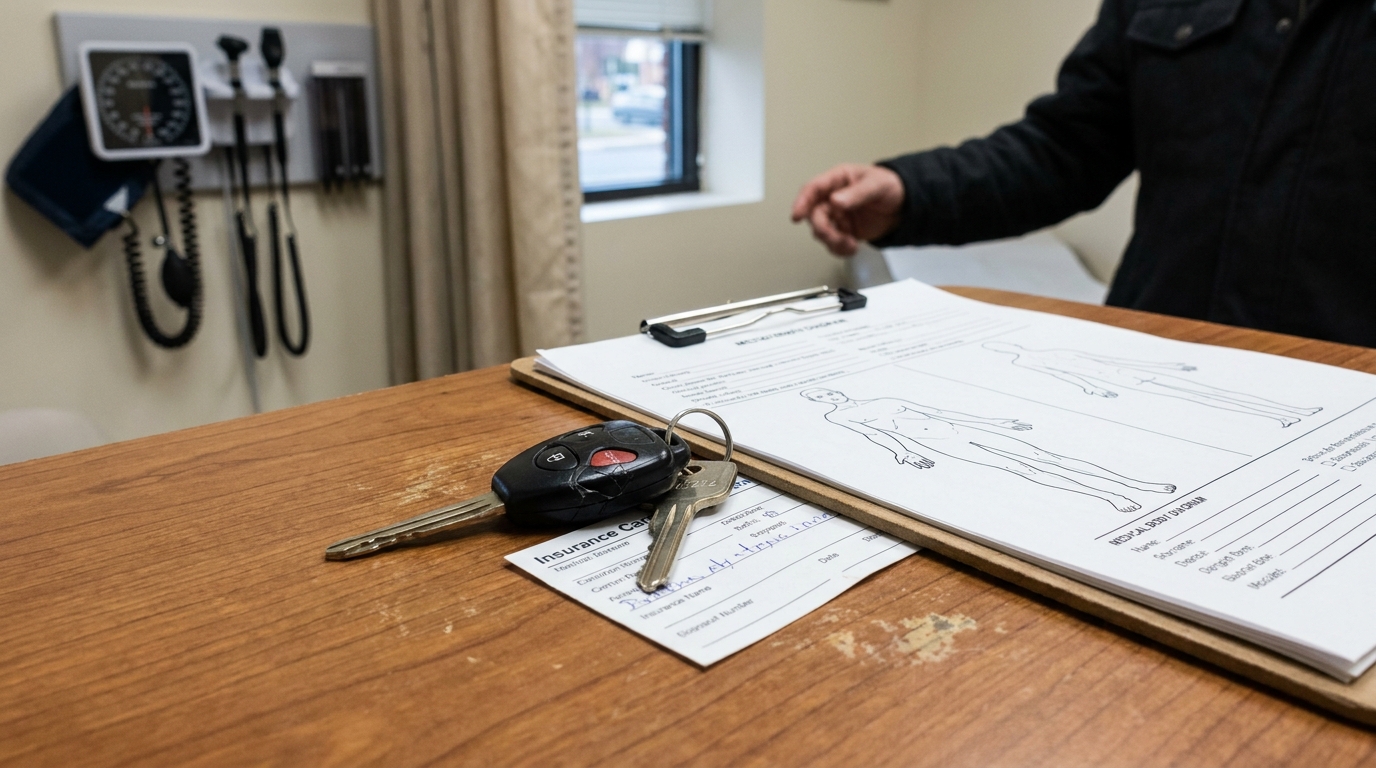

Protecting Your Albany Car Accident Claim Through Strong Injury Records
Key Takeaways: To document injuries after a car accident in Albany, seek immediate medical care, follow all treatment recommendations, and preserve a complete paper trail including ER records, diagnostic imaging, physician notes, a symptom journal, photographs, and proof of lost wages. Prompt care is critical because it links the collision to your injuries and prevents insurers from disputing causation. Because New York is a no-fault state, thorough records are often necessary to meet the serious injury threshold under Insurance Law § 5102(d) and pursue the at-fault driver directly. Protect evidence by avoiding recorded statements and social media posts. New York generally followed a pure comparative negligence rule, but effective May 27, 2026 a change to CPLR § 1411 limits recovery in certain motor vehicle personal injury actions subject to Insurance Law Article 51, recovery is barred if the claimant’s culpable conduct is greater than the defendant’s. Act quickly, most claims must be filed within three years under CPLR § 214(5), with much shorter deadlines for government claims.
The most effective way to document injuries after a car accident in Albany is to seek immediate medical care, follow every treatment recommendation, and preserve a complete paper trail that ties your injuries directly to the crash. Strong documentation begins at the scene and continues through every doctor visit, diagnostic scan, and follow-up appointment. For serious injuries such as fractures, significant disfigurement, or permanent limitation of use of a body part, thorough records often separate a fully compensated claim from a denied one. In New York’s no-fault system, your medical proof frequently determines whether you can pursue the at-fault driver directly.
If you or a loved one suffered a serious injury in a Capital Region crash, the team at Hacker Murphy can help you preserve evidence and build a strong claim. Call us at 518-274-5820 or reach out through our contact page to discuss your next steps today.
Why Prompt Medical Care Anchors Your Entire Claim
Getting evaluated by a medical professional right away creates the most important link in your claim: the connection between the crash and your injuries. Adjusters routinely look for treatment gaps to dispute causation. Delays give insurance companies an opportunity to argue your injuries aren’t crash-related. When you wait days or weeks to see a doctor, you hand the insurer a ready-made defense, even when your pain is genuine and worsening.
Many contested car accident claims involve injuries that didn’t feel severe immediately after impact. Soft-tissue damage, concussions, and spinal injuries often surface later, which is exactly why early evaluation matters. A contemporaneous medical record showing you reported symptoms promptly is far more persuasive than testimony reconstructed months later.
💡 Pro Tip: Tell every treating provider that your symptoms began with the crash, and ask that the connection be noted in your chart. That notation can defeat a later “pre-existing condition” argument.
What Belongs in Your Injury Documentation File
Comprehensive injury documentation in Albany NY combines official records, medical evidence, and your own contemporaneous notes. No single document tells the whole story, so assemble overlapping proof that’s difficult for an insurer to dismiss. The strongest files include:
-
Emergency room and ambulance records, plus all imaging such as X-rays, CT scans, and MRIs
-
Treatment notes from physicians, surgeons, and physical therapists, including diagnoses and work restrictions
-
A symptom and pain journal recording how injuries affect daily life over time
-
Photographs of visible injuries taken at regular intervals as they heal or scar
-
Proof of lost wages, mileage to appointments, and out-of-pocket medical expenses
These materials support both medical and financial recovery. Economic damages cover measurable losses like medical bills and lost income, while non-economic damages address pain, suffering, and emotional distress. In rare cases involving egregious conduct, punitive damages may also be available.
💡 Pro Tip: Keep a dedicated folder, physical or digital, for every accident-related document. When your file is organized, your attorney can move faster and your claim looks more credible.
How No-Fault Rules Shape What You Need to Prove
New York’s no-fault framework changes how, and against whom, you can recover, making your injury documentation even more important. In New York, each driver’s own insurance pays for certain economic losses through their no-fault (Personal Injury Protection) coverage. You can generally only sue the at-fault driver when your injuries meet the serious injury threshold under Insurance Law § 5102(d) or your economic losses exceed your basic economic loss coverage.
Detailed records showing the nature, severity, and duration of your condition are what allow you to cross that line. To understand the broader timeline of preserving a claim, review our guidance on Albany car crash evidence in the critical weeks after a collision.
Comparing Documentation Sources and What They Prove
Different records carry different weight, and understanding their roles helps you build a complete picture. The table below outlines common sources and their evidentiary purpose in a typical Albany claim.
|
Documentation Source |
Primarily Establishes |
|---|---|
|
ER and hospital records |
Immediate injuries and crash causation |
|
Diagnostic imaging |
Objective proof of fractures or internal damage |
|
Treating physician notes |
Diagnosis, prognosis, and treatment course |
|
Personal pain journal |
Day-to-day impact and non-economic damages |
|
Wage and expense records |
Economic losses and lost earning capacity |
Objective evidence like imaging is hardest for an insurer to challenge, while your journal adds human context supporting pain and suffering. Used together, these sources reinforce one another and reduce room for an adjuster to minimize your claim.
Protecting Your Records From Insurance Tactics
Documenting your injuries is only half the battle; protecting that evidence from insurer tactics is the other half. Adjusters often request recorded statements early, before you understand the full extent of your injuries. You are not legally obligated to provide a recorded statement to the other driver’s insurance company. Adjusters are trained to ask questions that could weaken your claim.
A practiced Albany car accident attorney generally handles these communications so your words aren’t twisted into a causation defense. Under CPLR § 1411(a), culpable conduct generally does not bar recovery and damages are diminished proportionally. However, effective May 27, 2026 an added CPLR § 1411(b) applies to motor vehicle personal injury actions subject to Insurance Law Article 51 (no-fault) and bars recovery where the claimant’s culpable conduct is greater than the culpable conduct of the defendant(s). Because this comparative negligence framework affects recovery in car accident cases, well-documented injuries help maximize the portion attributable to the other driver.
💡 Pro Tip: Avoid posting about the crash or your activities on social media. Insurers regularly use photos and posts to argue your injuries are less severe than your records show.
Why Deadlines Make a Car Accident Lawyer Albany Residents Trust Essential
Even perfect documentation loses its value if you miss the filing deadline, so timing must guide your strategy from day one. Under CPLR § 214(5), most personal injury actions, including car accident claims, must be commenced within three years of the crash date. The official New York court system publishes a helpful statute of limitations timetable that lists deadlines across many case types.
Some deadlines are far shorter. Claims against a government entity, such as the City of Albany, generally require a Notice of Claim within 90 days and a lawsuit within one year and 90 days. Wrongful death actions generally must be filed within two years of death. Courts interpret exceptions narrowly, and they don’t apply automatically, so never assume extra time exists. A knowledgeable car accident lawyer Albany families rely on can confirm which deadline governs your situation.
💡 Pro Tip: Government claim deadlines are entirely separate from the three-year civil deadline. Missing the 90-day Notice of Claim can bar a municipal claim long before the general statute of limitations runs.
Frequently Asked Questions About Documenting Albany Car Accident Injuries
1. How soon after a crash should I see a doctor?
As soon as possible, ideally the same day. Prompt care creates a medical record linking your injuries to the crash and reduces the chance an insurer argues your injuries came from something else. Even minor discomfort warrants evaluation, as conditions like concussions and spinal injuries can worsen over time.
2. What if my injury did not appear serious at first?
Delayed-onset injuries are common and still compensable, but they require careful documentation. Report new or worsening symptoms to a provider immediately and ask that the onset be tied to the accident in your chart. Consistent follow-up treatment helps establish the injury stems from the collision.
3. Can I still recover damages if I was partly at fault?
It depends on the case. New York historically followed a pure comparative negligence rule, but effective May 27, 2026 a change to CPLR § 1411 creates a limit for motor vehicle personal injury actions subject to Insurance Law Article 51: recovery is barred if the claimant’s culpable conduct is greater than the defendant’s; otherwise damages are diminished proportionally. Pure comparative negligence principles continue to apply in many non-motor-vehicle personal injury contexts.
4. How long do I have to file an Albany car accident claim?
Generally three years from the crash date under CPLR § 214(5). Shorter deadlines apply to claims against government entities, which usually require a Notice of Claim within 90 days. Confirm your deadline early, as exceptions are interpreted narrowly.
5. Do I have to give the other insurer a recorded statement?
No, you are not legally required to provide one. Adjusters often use recorded statements to find inconsistencies that undercut your claim. Speak with an attorney before agreeing to any recorded interview.
Bringing Your Documentation Together for a Stronger Recovery
Careful injury documentation is the foundation of every successful Albany car accident claim, especially for serious injuries that meet New York’s threshold. By seeking prompt care, preserving complete medical records, keeping a pain journal, and guarding your evidence against insurer tactics, you give yourself the strongest possible position. Combined with awareness of strict filing deadlines and New York’s comparative negligence rules (including recent changes for motor vehicle cases), these steps protect both your health and your right to full compensation.
If you’re facing mounting medical bills or insurer pushback, the attorneys at Hacker Murphy are ready to help you protect your claim. Call a car accident lawyer Albany injury victims trust at 518-274-5820 or request your consultation online to take the next step toward recovery.