
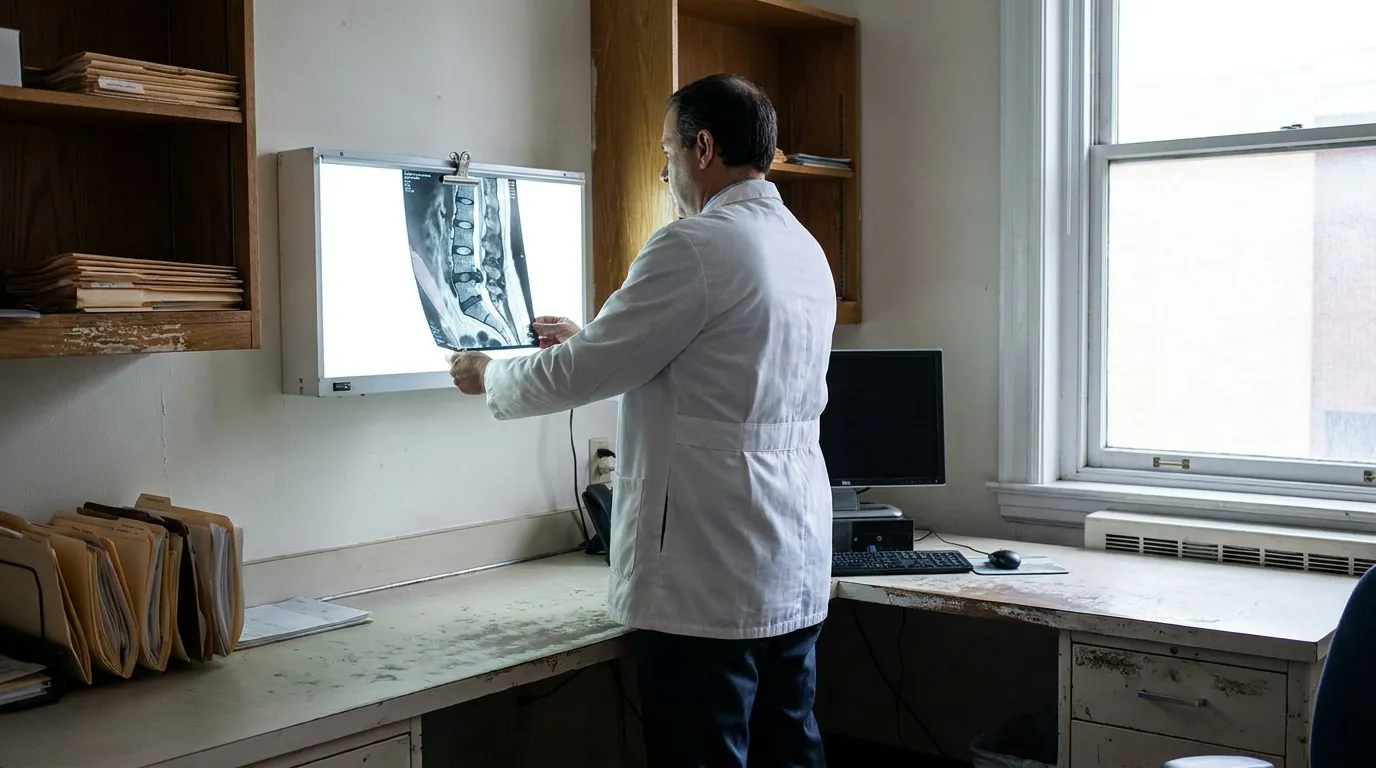
When a Herniated Disc Turns a Crash Into a Legal Fight
Key Takeaways: A herniated disc can meet New York’s serious injury threshold, but the diagnosis alone rarely suffices. Under Insurance Law § 5104(a), no-fault generally bars pain-and-suffering claims unless the injury fits the § 5102(d) definition of serious injury. To clear the threshold, a disc injury must fall within categories such as permanent consequential limitation or significant limitation of use, supported by imaging, quantified range-of-motion testing, and a treating physician’s causation opinion. Insurers and defense doctors commonly attack these claims by arguing the injury has resolved, that findings are degenerative rather than traumatic, or that gaps in treatment undermine seriousness. No-fault medical benefits under § 5106(a) run on a separate track regardless of threshold. Because outcomes hinge on specific medical and factual details, prompt imaging, consistent treatment, and early legal guidance are essential to protecting an Albany spinal injury claim.
A herniated disc can meet New York’s serious injury threshold, but the diagnosis alone is rarely enough. What matters is proof that the disc injury caused a lasting limitation or loss of function.
New York’s no-fault system generally bars car accident victims from suing unless statutory requirements for stepping outside no-fault are met, and for disc injuries that hurdle is the central issue. This post explains how the threshold works, what courts require, and how these cases unfold.
If you are dealing with a spinal injury after a crash, the team at Hacker Murphy can help you understand your options. Call us at 518-274-5820 or reach out through our confidential contact form to discuss your situation with a member of our team.

The Serious Injury Threshold Car Accident Albany New York Claims Must Clear
Every pain-and-suffering claim in a New York motor vehicle case starts with a single statutory gate. Under NY Insurance Law § 5104(a),
in any action by or on behalf of a covered person against another covered person for personal injuries arising out of negligence in the use or operation of a motor vehicle, there shall be no right of recovery for non-economic loss except in the case of a serious injury, or for basic economic loss.
That means an Albany driver with a herniated disc cannot recover for pain and suffering unless the injury fits the statutory definition first.
The definition itself lives in a separate provision.
NY Insurance Law § 5102(d) defines serious injury as a personal injury which results in death; dismemberment; significant disfigurement; a fracture; loss of a fetus; permanent loss of use of a body organ, member, function or system; permanent consequential limitation of use of a body organ or member; significant limitation of use of a body function or system; or a medically determined injury or impairment of a non-permanent nature which prevents the injured person from performing substantially all of the material acts constituting his or her usual and customary daily activities for at least 90 of the 180 days immediately following the injury.
You can read the full text of the statutory serious injury definition to see how narrowly the categories are drawn. A herniated disc is not listed as an automatic qualifier the way a fracture is.
Because a disc herniation is not named in the statute, it must fit an existing category.
Section 5102(d) enumerates permanent consequential limitation of use of a body organ or member and significant limitation of use of a body function or system as qualifying serious injury categories, and its non-permanent 90/180-day category can also apply where a disc injury sufficiently limits daily activities.
In practice, an Albany crash victim must show objective medical evidence of a qualifying limitation rather than relying on diagnosis alone. This is the heart of the serious injury threshold car accident Albany New York plaintiffs face.
Why No-Fault Stands Between You and a Lawsuit
New York’s no-fault framework pays basic benefits quickly while limiting lawsuits.
No-fault covers only basic economic loss, capped at $50,000 per person in the aggregate, which includes reasonable medical and rehabilitation costs, 80 percent of lost income up to $2,000 per month for three years, and $25 per day for other expenses, plus a separate $2,000 death benefit; it does not cover non-economic damages or property damage.
Pain and suffering sit entirely outside that coverage.
There are defined ways to step outside the system.
Section 5104 of the Insurance Law provides two main situations in which a car accident victim can file a lawsuit: to sue for economic damages beyond basic economic loss, or for non-economic damages if they have suffered a serious injury.
For most disc-injury clients, the second path matters, and it depends on satisfying § 5102(d).
Not every defendant is protected by these restrictions.
No-fault restrictions do not apply to lawsuits against most parties other than at-fault drivers and vehicle owners, such as a manufacturer responsible for a defect, subject to the no-fault insurer’s lien.
If a defective component contributed to the crash, that avenue exists independent of the threshold. Our overview of Albany car accident attorney services outlines how these matters typically proceed.
Proving a Herniated Disc Qualifies as a Serious Injury
Proving the threshold is an evidentiary exercise, not a diagnostic one. The medical record must connect the herniation to a measurable, ongoing loss of function tied to the crash. The strongest files build this connection early and document it consistently.
The Objective Evidence Courts Tend to Weigh
Courts generally look for objective findings, not just reported pain. The kinds of proof that typically support a disc-related claim include:
- MRI or CT imaging showing herniation or bulging correlated with the accident
- Range-of-motion testing with measured, quantified deficits
- Treating physician opinions linking the limitation to the collision
- A consistent treatment history without unexplained gaps in care
No single item guarantees a result, and outcomes depend heavily on the facts. A recent decision illustrates the point. In Berthold v. Williams, 2025 NY Slip Op 50331(U),
the court set out the Insurance Law § 5102(d) definition of serious injury and noted there is no non-economic recovery except for serious injury under Insurance Law § 5104(a).
The analysis underscores that a herniated disc must be tied to a qualifying category to survive.
Where These Claims Commonly Stall
Many disc claims run into trouble at the causation stage. Insurers frequently argue that a herniation existed before the crash or reflects ordinary aging rather than trauma. Closing that gap requires prior records, prompt post-crash imaging, and a treating physician willing to address causation directly.
💡 Pro Tip: If you had any earlier back complaints, tell your attorney and treating doctors right away. Addressing prior findings head-on is more persuasive than having a defense examiner surface them later.
How Insurers and Defense Doctors Attack Disc Claims
Serious injury cases attract sustained resistance.
These cases tend to have higher stakes and meet stiff resistance from insurers, which is why victims should consider working with an attorney experienced in this area.
The defense playbook is fairly predictable.
The first move is usually an independent medical examination. In Berthold, for example,
the defendants’ orthopedic examiner concluded the injured body parts had resolved and that the plaintiff did not sustain any significant or permanent injury.
These reports target the permanency and limitation elements directly.
The second move attacks causation through radiology.
In the same case, the defendants’ radiologist reviewed the MRIs and opined that although there were disc herniations and bulges, no traumatic damage had taken place.
This degenerative-versus-traumatic argument is common, and rebutting it generally requires a well-supported treating-physician opinion.
| Defense Argument | What It Targets | Typical Response |
|---|---|---|
| Injury has "resolved" | Permanency element | Ongoing treatment and current deficits |
| Findings are degenerative | Causation | Prior records and prompt imaging |
| Gaps in treatment | Seriousness of injury | Documented, explained care history |
The Medical Benefits Track Runs Separately
Your no-fault medical benefits move on a different timeline than any lawsuit.
Under NY Insurance Law § 5106(a), payments of first party benefits shall be made as the loss is incurred, are overdue if not paid within thirty days after the claimant supplies proof of the fact and amount of loss, and all overdue payments shall bear interest at the rate of two percent per month.
That benefit track exists whether or not you ultimately clear the threshold.
Keeping the two tracks distinct helps avoid confusion. No-fault handles initial medical bills and partial lost wages, while the serious-injury claim addresses pain and suffering. For a fuller breakdown of qualifying injuries, our guide on what injuries meet the serious injury threshold after an Albany crash walks through the categories in detail.
Frequently Asked Questions
1. Does a herniated disc automatically qualify as a serious injury?
No.
Insurance Law § 5102(d) enumerates categories such as permanent consequential limitation of use and significant limitation of use, none of which name a herniated disc by itself.
The injury must be tied to a qualifying limitation supported by objective evidence.
2. What is the serious injury threshold in New York?
It is the statutory bar that limits pain-and-suffering claims. Under § 5104(a), a covered person generally cannot recover non-economic damages against another covered person unless the injury meets the § 5102(d) definition.
3. Can I still recover if my disc injury does not meet the threshold?
Possibly, but recovery is limited. No-fault benefits may still cover medical costs and partial lost wages, and claims against non-covered parties, such as a product manufacturer, may fall outside threshold restrictions.
4. What evidence best supports a disc-related claim?
Objective, consistent medical proof. Imaging, quantified range-of-motion testing, and a treating physician’s causation opinion generally carry more weight than subjective complaints alone.
5. How soon should I act after an Albany crash?
Promptly. Early imaging and continuous treatment strengthen both causation and permanency arguments, and delays give insurers room to argue your injury is unrelated or minor.
Protecting Your Right to Full Recovery
A herniated disc can satisfy New York’s threshold, but only when the record proves a lasting, accident-related limitation. The statute does not hand you the claim; it hands you a standard to meet, and insurers will test every element. Because outcomes turn on specific medical and factual details, no result can be promised, and each case deserves individual review. Understanding how § 5102(d), § 5104, and § 5106 interact is the first step toward protecting a spinal injury crash claim in Albany.
If a herniated disc from a crash has left you facing medical bills and insurer pushback, Hacker Murphy is ready to review your claim and explain your options. Call 518-274-5820 or send us a message through our online case review request to speak with our team about your next steps.