

What 2025’s Record Cyber Crime Numbers Mean If You Are Under Investigation in Albany
Key Takeaways: The FBI’s most recent Internet Crime Report documented $16.6 billion in losses across 859,000 complaints, directly increasing investigative pressure, federal funding for cyber units, and prosecutorial aggressiveness against those accused of computer offenses in the Capital Region. An IC3 complaint, particularly when combined with other reports or when reporting criteria are met, can contribute to investigative actions such as frozen funds, subpoenaed records, and seized devices; however, these actions do not occur automatically from a single report and generally require independent legal process and agency discretion. New York cases typically follow either a state-level access track (unauthorized use, computer trespass) or a federal fraud or identity-theft track, each with different sentencing exposure and timelines. New York’s data-breach law under General Business Law § 899-aa shapes the environment, as notification trails often become evidence in criminal investigations. Effective defense centers on intent, attribution, and digital evidence integrity, with attribution frequently being the prosecution’s weakest link. The most important step is involving counsel at the first sign of investigation, not after arrest, and declining informal interviews until an attorney is present.
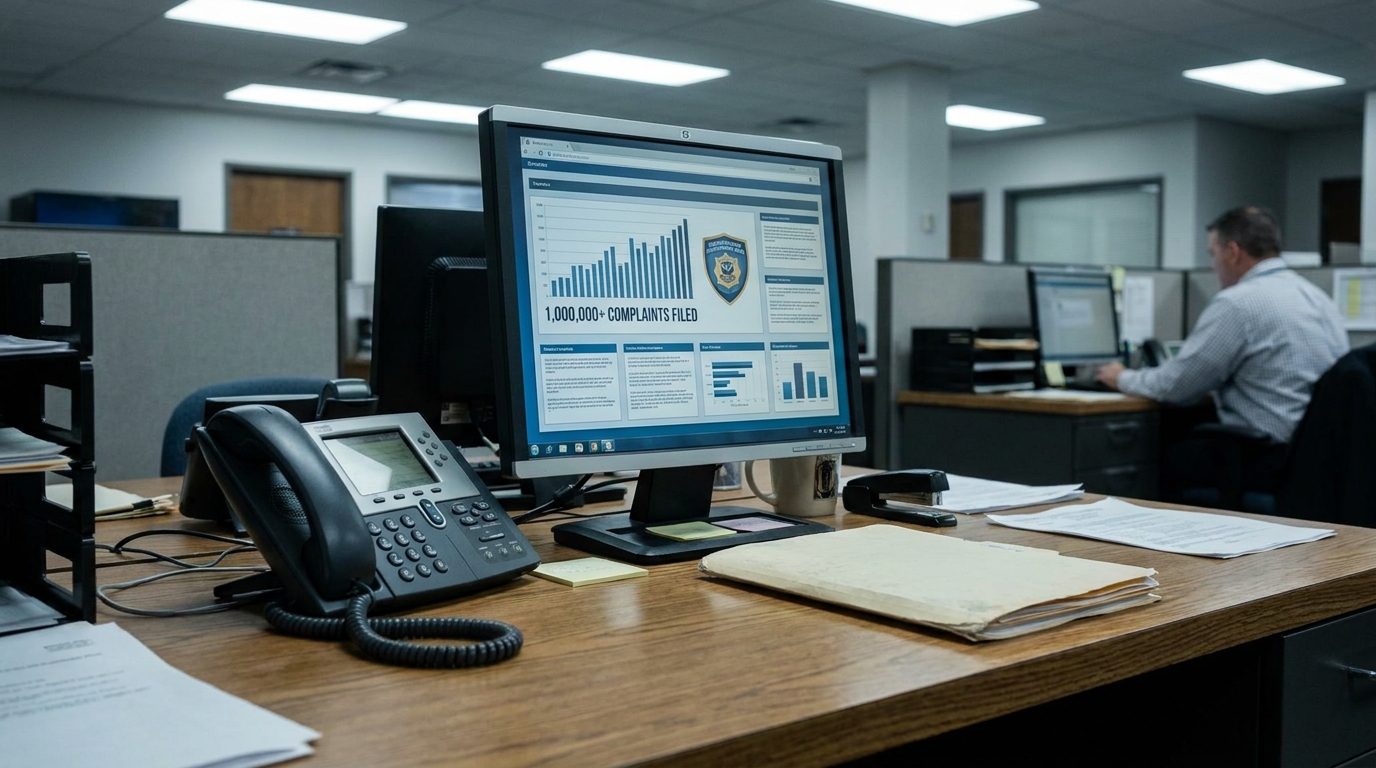
The FBI logged more than 859,000 internet crime complaints and $16.6 billion in reported losses in its most recent annual report, directly affecting those accused of computer offenses in the Capital Region. Rising complaint volume and losses increase investigative pressure, federal funding for cyber units, and prosecutorial aggressiveness. If your name surfaces in an inquiry tied to unauthorized access, internet fraud, or identity theft, these rising numbers translate into more resources aimed at building cases. Understanding how investigations work and what defenses exist matters far more than headline statistics.
If you are being questioned or charged, do not navigate this alone. The team at Hacker Murphy handles computer crime matters across upstate New York and can be reached at 518-274-5820 or through the firm’s secure contact form to discuss your situation in confidence.
Why the IC3 Complaint Surge Changes the Enforcement Climate
A record complaint year reshapes how cases get prioritized, not just counted. As the lead federal agency for cyber matters, the FBI engages with victims and works to unmask those committing malicious cyber activities. The Internet Crime Complaint Center collects reports from the public, and the IC3’s Recovery Asset Team assists in freezing funds for cyber crime victims.
For the defense, an IC3 complaint can contribute to a chain of events. In certain cases, and when combined with other information or when reporting criteria are met, funds may be frozen, financial records subpoenaed, and devices seized before charges are filed; however, such pre-charge tools generally require independent legal process and are executed at the discretion of the receiving law enforcement agency. You can review the bureau’s mission on the FBI cyber investigation overview. Those who fare best recognize early that an inquiry is underway and respond with counsel rather than informal explanations.
💡 Pro Tip: If federal agents request a "voluntary" interview about online activity, you are generally not required to speak without an attorney present. Politely declining until you have counsel is rarely held against you.
How Cyber Crime Charges Actually Develop in New York
Most computer crime cases begin as either a state-level access offense or a federally driven fraud or identity-theft investigation. New York prosecutes unauthorized use of a computer and computer trespass under the Penal Law, while federal authorities pursue wire fraud, aggravated identity theft, and related counts. This distinction matters enormously, because state and federal systems carry different sentencing exposure, discovery timelines, and charging discretion.
New York’s data-breach framework shapes the broader environment. Under New York General Business Law § 899-aa, state law requires businesses to notify consumers of data security breaches so affected consumers can protect themselves against identity theft. When a breach affects New York residents, entities must notify the state attorney general, department of state, and division of state police, and (for DFS-regulated entities) the New York Department of Financial Services. These notification trails frequently become starting evidence in criminal investigations, which is why a computer crime attorney Albany residents trust will scrutinize how underlying data was collected and handled.
The Statutory Definitions That Drive Exposure
What counts as protected data is wider than most assume. The statute defines private information to broadly cover Social Security numbers, driver’s license numbers, financial account data, biometric information, and online credentials such as a user name or email address combined with a password or security question. That sweeping definition means conduct a client viewed as minor can be recharacterized as touching highly sensitive data, raising the stakes considerably.
Timing and penalty provisions add further pressure. Under the current § 899-aa (as amended effective December 21, 2024), disclosure to affected New York residents must be made in the most expedient time possible and without unreasonable delay, provided that such notification is made within thirty days after the breach has been discovered, subject to a law-enforcement exception if a law enforcement agency determines that notification would impede a criminal investigation. Businesses that knowingly or recklessly violate notification rules face civil penalties of the greater of five thousand dollars or up to twenty dollars per failed notification, capped at two hundred fifty thousand dollars.
💡 Pro Tip: Civil breach-notification liability and criminal computer-crime exposure are distinct legal systems. Resolving one does not automatically resolve the other, so treat them as separate fronts requiring separate strategy.
What a Real Defense Looks Like, Not Just a Definition
Effective defense work centers on intent, attribution, and the integrity of digital evidence. Prosecutors argue that access was "unauthorized" and the accused acted knowingly. The defense examines whether permission existed, whether credentials were shared, and whether alleged conduct meets the statutory definition. One recurring theme: as the firm explained in its analysis of how making an unauthorized copy can constitute theft, the line between routine activity and a chargeable offense can be surprisingly thin.
Attribution is often the prosecution’s weakest link. Linking a person to a keyboard at a specific moment requires more than an IP address. Defense counsel deploys forensic computer examination to test chain-of-custody, timestamps, and whether multiple users could have accessed a device or account. Where the government’s forensic process was sloppy, motions to suppress or exclude evidence can reshape the case.
Common challenges include:
- Establishing whether access was actually authorized or based on shared or ambiguous permissions
- Challenging how seized devices were imaged, stored, and analyzed
- Separating a client’s conduct from others who used the same network or credentials
- Managing parallel state and federal exposure on overlapping facts
💡 Pro Tip: Preserve, do not delete. Wiping a device or account after learning of an investigation can support obstruction or spoliation arguments. Let your attorney decide what is safe to retain.
State Versus Federal Exposure at a Glance
Where a case lands often determines its trajectory more than the underlying facts. The table below outlines general distinctions practitioners weigh, though every matter turns on its own circumstances.
| Factor | State Track (NY) | Federal Track |
|---|---|---|
| Typical charges | Unauthorized use, computer trespass | Wire fraud, aggravated identity theft |
| Prosecuting office | County DA (Albany, Rensselaer, Saratoga) | U.S. Attorney’s Office |
| Sentencing structure | NY Penal Law ranges | Federal guidelines, mandatory minimums possible |
| Discovery timing | NY discovery reform deadlines | Federal rules and disclosure practice |
When to Bring in a Computer Crime Attorney Albany Residents Rely On
Involve counsel at the first sign of investigation, not after arrest. Early intervention allows an attorney to communicate with investigators, preserve favorable evidence, and sometimes influence charging decisions before they harden. For professionals whose careers and reputations are at stake, that head start can be decisive.
Discretion is a core concern for most clients, and rightly so. People facing these allegations are frequently first-time accused with no prior record who want a strategy-focused, non-judgmental advocate. A seasoned New York computer crime lawyer evaluates the facts, jurisdiction, and timing before recommending a path, because outcomes depend on specifics. No responsible attorney can promise a result, but informed early decisions expand available options.
Frequently Asked Questions
1. What is the difference between state and federal cyber crime charges in New York?
State charges proceed through a county district attorney under New York Penal Law, while federal charges run through the U.S. Attorney’s Office under federal statutes. Federal matters can carry mandatory minimums and follow federal sentencing guidelines. Which track applies shapes nearly every strategic decision.
2. Can I be charged based only on an IP address?
An IP address alone is rarely sufficient to prove who physically used a device. Attribution requires additional forensic evidence connecting a specific person to specific conduct at a specific time. Defense often focuses on this gap, since shared networks and accounts create reasonable doubt.
3. Do New York’s data-breach laws apply to individuals or only businesses?
Under New York General Business Law § 899-aa, notification obligations apply to persons and businesses that own or license computerized private information of New York residents. These are civil obligations, distinct from criminal liability, though the same incident can generate both.
4. Should I talk to FBI agents if they contact me?
You are generally not required to answer investigators’ questions without counsel present. Informal explanations often become evidence, and well-intentioned statements can be misconstrued. The safer course is to decline politely and contact an attorney before any interview.
5. How quickly should I act if I learn of an investigation?
As soon as possible, ideally before charges are filed. Early counsel can preserve evidence, manage communications, and sometimes affect whether charges proceed. Waiting until after arrest narrows strategic options.
Moving Forward With Confidence in a High-Enforcement Year
Record-setting loss totals in the FBI’s most recent reporting signal a sustained, well-funded push against cyber offenses, making early, informed defense more important than ever. Legal questions in these cases turn on intent, attribution, jurisdiction, and the soundness of digital evidence. Outcomes vary based on facts, the court, and how quickly the accused responds. What does not vary is the value of understanding your rights before speaking with investigators or making decisions that are difficult to reverse.
If you are facing scrutiny or charges connected to computer or internet activity in the Capital Region, reach out to Hacker Murphy for a confidential conversation. Call 518-274-5820 or use the firm’s online consultation request to connect with a defense team that understands the stakes for your career, finances, and reputation.