
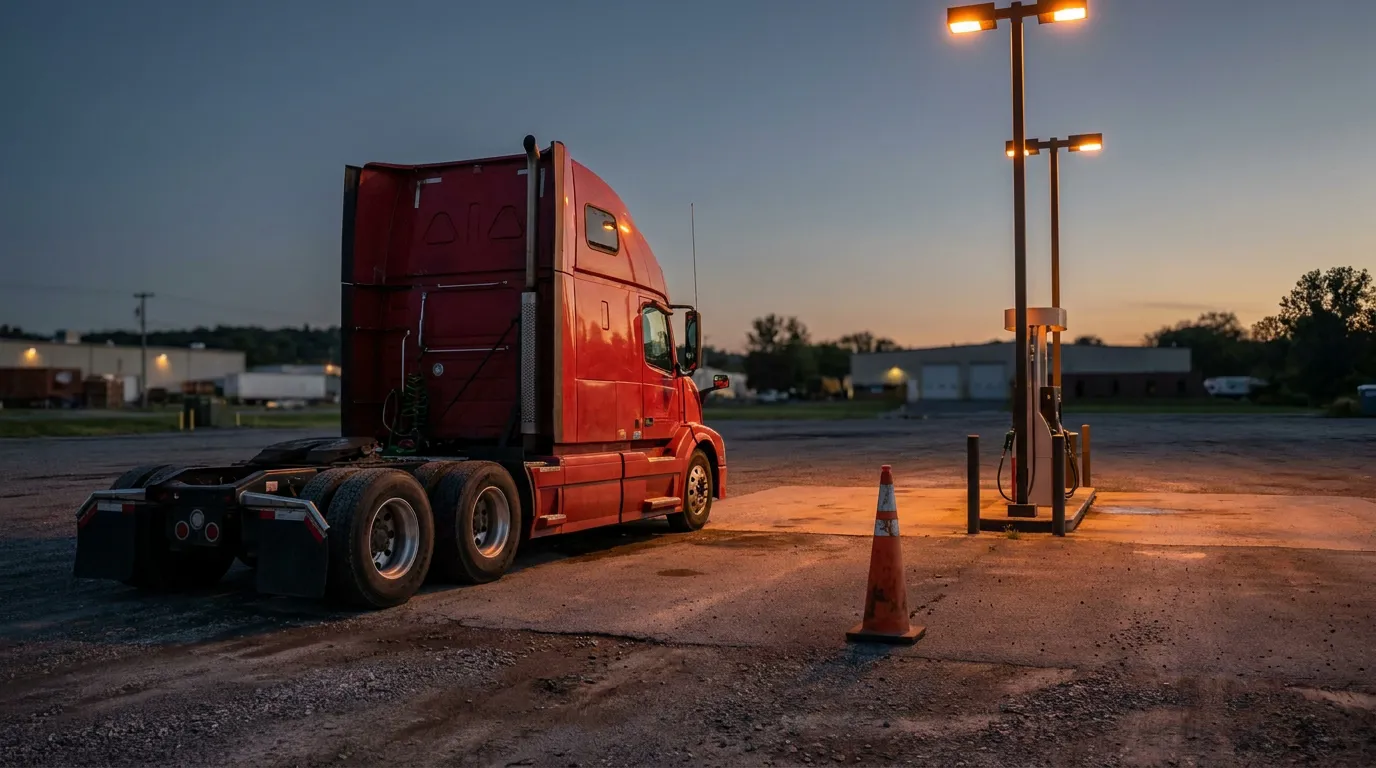
Off-Duty DWI Arrests and Your Commercial License
Key Takeaways: A DWI arrest in your personal car in Schenectady can lead to disqualification of your New York CDL, even if you were off duty, because New York’s rules generally focus on who was driving rather than which vehicle they were in. Under VTL § 510-a, a first qualifying impaired driving conviction generally means a one-year disqualification (three years if hazardous materials were involved). A second can mean a lifetime disqualification, though limited reinstatement may be possible later. CPL § 170.55(9) bars an adjournment in contemplation of dismissal for most driving-related offenses committed by CDL holders, so these cases generally end in a dismissal, an acquittal, or a conviction. A DWAI reduction may not protect your CDL, and a chemical test refusal can lead to disqualification on its own through the DMV. Employers may not knowingly let a disqualified driver operate a commercial vehicle, and a conviction can also affect your personal auto insurance. An early, evidence-focused defense may give commercial drivers a better chance to protect their careers.
Yes, a DWI arrest in your personal car in Schenectady can lead to disqualification of your New York commercial driver’s license (CDL), even if you were off duty and nowhere near a truck. New York’s CDL rules, including Vehicle and Traffic Law § 510-a, generally look at who was driving, not which vehicle they were in. A qualifying impaired driving conviction in a personal vehicle generally disqualifies a CDL holder from commercial driving for at least one year. New York also takes away one of the most common ways traffic cases get resolved, so CDL holders often have fewer options than other drivers. Disqualification generally depends on a conviction or a DMV finding, such as a refusal finding, and the criminal case may still be challenged at many points. A license suspension while the case is pending, which can apply in some cases such as a test result of.08% or higher, may still keep you off the road in the meantime.
If you hold a CDL and were arrested in Schenectady County, your job may depend on what happens in the next few weeks. Hacker Murphy represents commercial drivers across the Capital District in DWI and DWAI cases. Call 518-274-5820 or contact us now to talk about your case before your first court date.
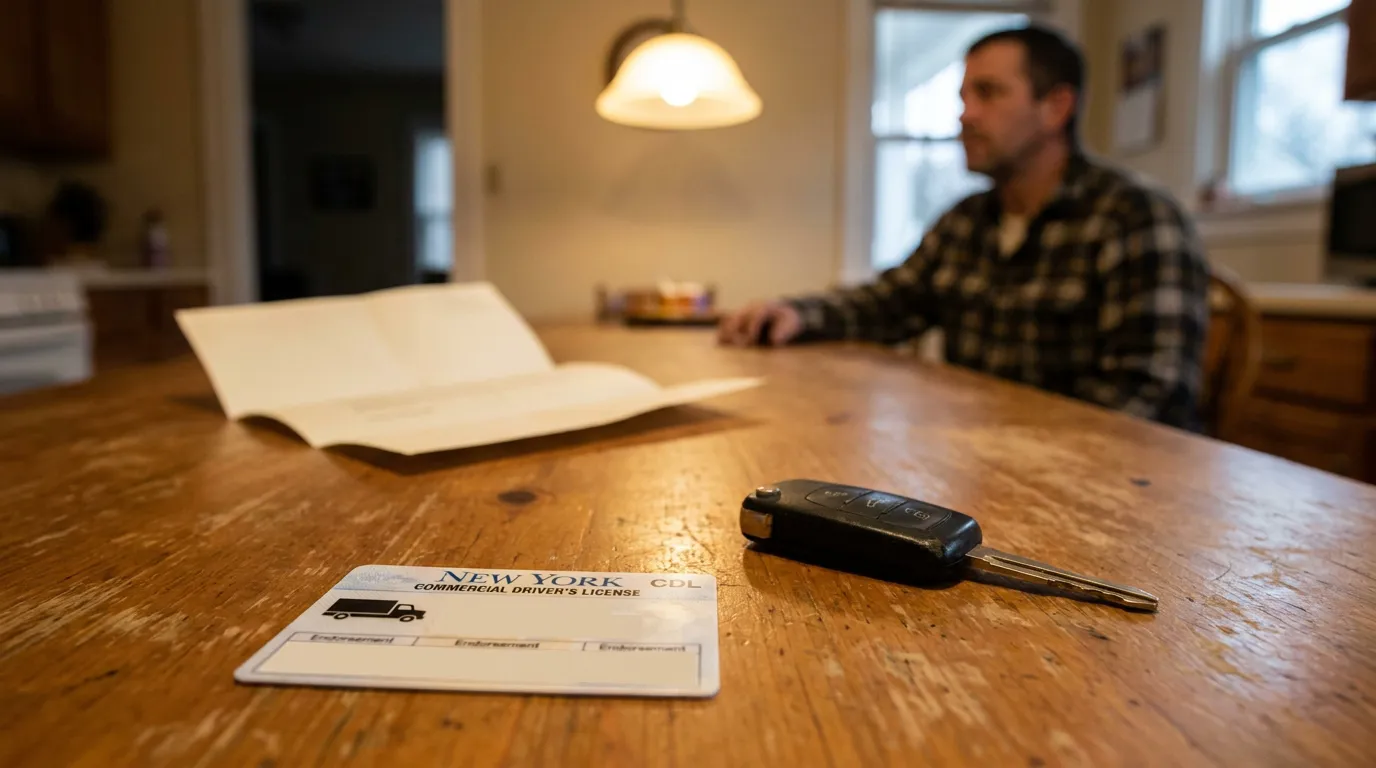
Why a Personal Car DWI Puts Your CDL at Risk
New York generally treats CDL holders differently from other drivers in DWI cases, even when the arrest happens in a personal vehicle. Many drivers assume their commercial license is safe if the arrest happened in the family car on a weekend. That assumption can cause a lot of damage. Under state law and the federal rules New York has adopted, holding a commercial license or permit is generally what triggers the stricter treatment.
The Statute That Takes Away a Common Off-Ramp
New York Criminal Procedure Law § 170.55(9) bars courts from granting an adjournment in contemplation of dismissal (ACD) for most driving-related Vehicle and Traffic Law offenses committed by a CDL holder. Under the ACD statute for CDL holders, a court may not grant an ACD for a VTL offense related to operating a motor vehicle if the offense was committed by the holder of a commercial learner’s permit or CDL, or was committed in a commercial motor vehicle as defined in VTL § 501-a(4). Parking, stopping and standing offenses are excluded.
The statute covers two separate situations, and the first one affects off-duty drivers. The ban applies if (1) the offense was committed by a CDL or permit holder, or (2) the offense was committed in a commercial motor vehicle. Because of the first situation, the ban can apply to an off-duty DWI in a non-commercial vehicle. In practice, a Schenectady CDL DWI case generally has to end in a dismissal, an acquittal, or a conviction. Federal "anti-masking" rules also generally bar courts from deferring or hiding a CDL holder’s traffic conviction.
How VTL § 510-a Disqualification Works
New York VTL § 510-a sets out when the DMV must disqualify a commercial driver, and impaired driving convictions under VTL § 1192 are among the main triggers. In general, a first qualifying offense means a one-year disqualification, or three years if the driver was carrying hazardous materials. A second qualifying offense can mean a lifetime disqualification, and limited reinstatement may be possible after a waiting period. A chemical test refusal can also lead to disqualification, and it counts toward these periods just as a conviction does. Exact periods depend on the offense and your record, so have someone review your full driving history before you make any decisions.
CDL DWI Disqualification New York: Comparing the Charges
The charge you end up with can matter a great deal, and a DWAI reduction generally does not protect a CDL the way it can protect a regular license. In New York, DWI can be charged based on a BAC of.08% or higher (per se DWI) or on proof of intoxication regardless of the BAC reading. DWAI by alcohol means your driving ability was impaired to any extent. A DWAI is a traffic infraction, not a crime. Still, CDL disqualification rules focus on impaired driving convictions, so a DWAI may still put your CDL at risk and may come up when you apply for or renew a CDL.
| Charge (VTL § 1192) | Criminal Classification | Possible CDL Impact |
|---|---|---|
| DWAI-Alcohol (§ 1192(1)) | Traffic infraction | May still trigger disqualification and appear in CDL background checks |
| DWI (§ 1192(2), (3)) | Misdemeanor (first offense) | Generally a disqualifying offense |
| DWAI-Drugs (§ 1192(4)) | Misdemeanor (first offense) | Generally a disqualifying offense |
| Chemical test refusal | Administrative finding (not a criminal charge) | May lead to disqualification on its own |
This comparison shows why standard plea strategies for non-commercial drivers often don’t work for commercial drivers. A plea that saves a regular driver’s license could still end a trucking career. That is why our CDL work starts with the evidence, not with plea talks.
What Happens to Your Job and Insurance
For many commercial drivers, losing work is the most immediate consequence. Under the commercial driver employer rules in New York Transportation Law § 140, no person or business may knowingly allow someone to drive a commercial motor vehicle while that person’s CDL is suspended, revoked, or cancelled, or while the person is disqualified. Federal regulations also bar employers from knowingly using a disqualified driver. Employers who break these rules can face civil penalties.
Employers have their own financial exposure, so they often act quickly once a disqualification goes on record. We have seen carriers take drivers off the road as soon as a disqualification appears, even when the driver has seniority and a clean work record. Our article on driving to work after a DWI conviction explains the limits of a conditional license, which does not authorize you to drive a commercial vehicle.
Your personal auto insurance may also be affected. Under New York Insurance Law § 3425, an insurer may generally decline to renew a personal auto policy because of a conviction for driving while intoxicated or impaired under VTL § 1192.
💡 Pro Tip: Read your employer’s handbook and any union agreement before you report the arrest. Many carriers have their own reporting deadlines, and the way you describe a pending charge (not a conviction) can affect whether you stay on non-driving duties while the case is open.
How a Commercial Driver DWI Defense Actually Proceeds
Since an ACD is generally not available, a strong defense for a CDL holder usually focuses on the evidence and the procedure. Schenectady County prosecutors know CDL holders have a lot to lose, and they sometimes assume that pressure will lead to a quick plea. We focus instead on weak points in the case, which often include:
- Whether the officer had a lawful basis for the traffic stop
- How field sobriety tests were given and scored
- Breath test machine calibration, maintenance records, and the required observation period
- Whether refusal warnings were given properly and accurately recorded
- Gaps in body camera or dash camera footage
Problems in any one of these areas can potentially lead to suppressed evidence, a dismissal, or a trial win. No attorney can promise a particular result, and outcomes depend on the facts.
Coordinating the DMV Side
A DMV refusal hearing is an administrative proceeding that runs separately from the criminal case, and its outcome can affect your CDL even if the criminal charge is later dismissed. Testimony given at the hearing may also become useful for the criminal defense. Our Schenectady DWI lawyer team handles both proceedings together to help reduce the risk that a statement in one hurts you in the other.
💡 Pro Tip: Don’t answer questions on a CDL renewal or job application about a pending charge without legal advice. Applicants generally must disclose prior impaired driving convictions, and an incomplete answer can cause its own problems.
Frequently Asked Questions
1. Can an off-duty DWI in my own car affect my commercial license?
Yes. Under New York law, a qualifying impaired driving conviction generally counts against a CDL holder regardless of what vehicle they were driving. CPL § 170.55(9) also bars ACDs for CDL holders for most driving-related offenses, even in personal vehicles.
2. Will a DWAI reduction save my CDL?
Possibly not. A DWAI is a traffic infraction rather than a crime, but it may still trigger disqualification and may come up in CDL background checks.
3. Can my employer keep me driving while I’m disqualified?
No. New York Transportation Law § 140 and federal regulations bar employers from knowingly allowing a disqualified driver to operate a commercial vehicle.
4. Why can’t I get an ACD like other drivers?
CPL § 170.55(9) bars ACDs for driving-related VTL offenses committed by CDL or commercial learner’s permit holders. Your case generally has to end in a dismissal, an acquittal, or a conviction.
5. Does a refusal count against my CDL?
Yes, it can. A DMV refusal finding generally leads to CDL disqualification, separate from the outcome of the criminal case.
Protecting Your Career After a Schenectady Arrest
A personal car DWI can disqualify a New York CDL, and the usual shortcuts available to other drivers are generally not available to commercial license holders. That makes an early, evidence-focused defense important.
Your license, your job, and your record may all be on the line, so don’t wait until your first court appearance. Talk with Hacker Murphy about your case. Call 518-274-5820 or schedule a confidential consultation today.
Disclaimer: This content is for informational purposes only and is not legal advice. Every case is unique, and results may vary. Consult an attorney about your specific circumstances.