
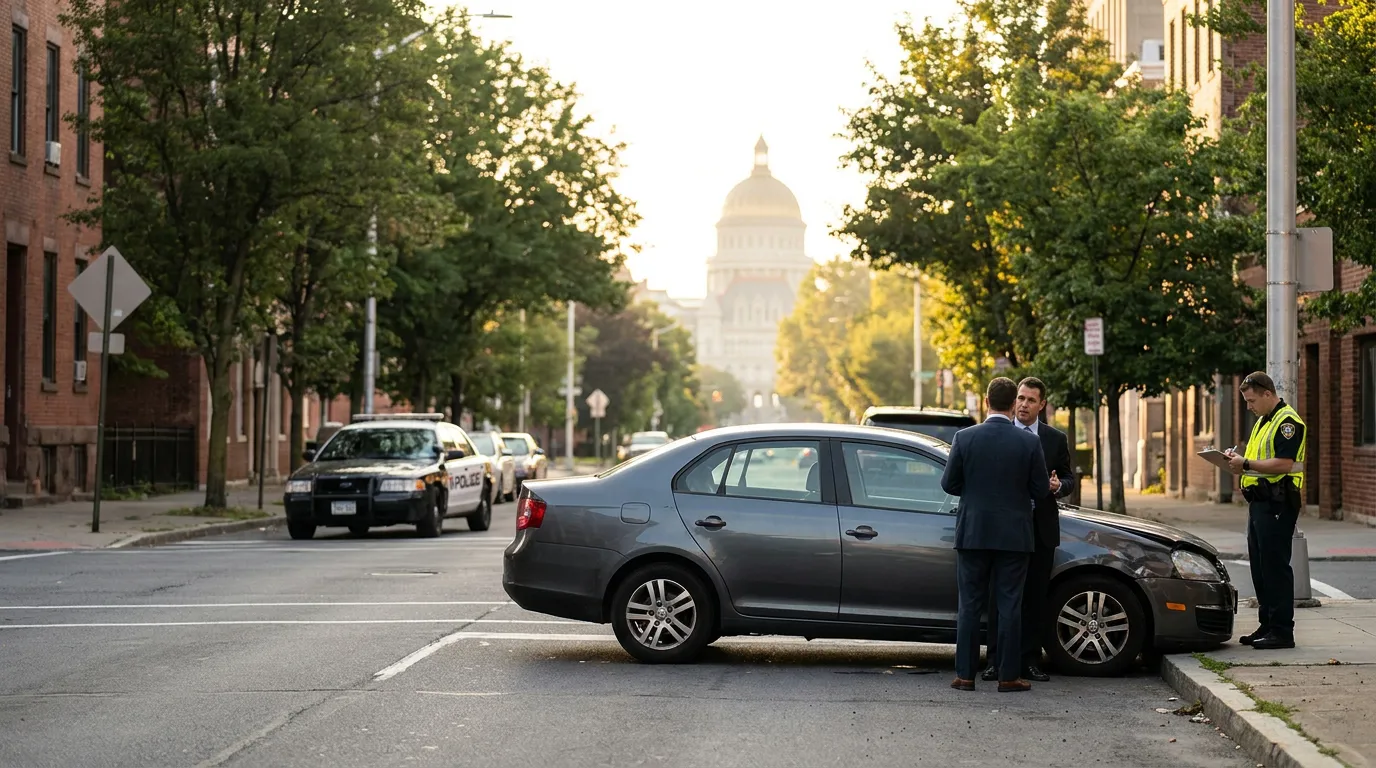
Building a Winning Negligence Case After an Albany Crash
Key Takeaways: Proving negligence in an Albany car accident requires establishing four elements: duty of care, breach, causation, and damages. Traffic law violations can establish negligence per se, automatically proving duty and breach. Causation requires showing both that the breach caused the collision and that injuries were foreseeable, while damages in serious-injury claims must meet New York’s no-fault threshold under Insurance Law § 5102(d). New York’s pure comparative negligence rule means sharing blame reduces but doesn’t bar recovery, and defendants bear the burden of proving your fault. Strong evidence, police reports, citations, photos, witness statements, medical records, and video, is critical. Act quickly to protect your claim against strict deadlines: generally three years under CPLR § 214(5), or shorter periods when government entities are involved.
Proving negligence in an Albany car accident case means showing four things: the other driver owed you a duty of care, breached that duty, caused your crash, and left you with real harm. The strongest cases tie those elements to a clear violation of New York traffic law and solid evidence gathered early. Understanding how courts in the Capital Region evaluate fault helps you protect a serious-injury claim from the start.
If you were hurt in a crash and face aggressive insurance tactics, the team at Hacker Murphy is ready to help. Call us at 518-274-5820 or reach out through our secure contact form to discuss your options.
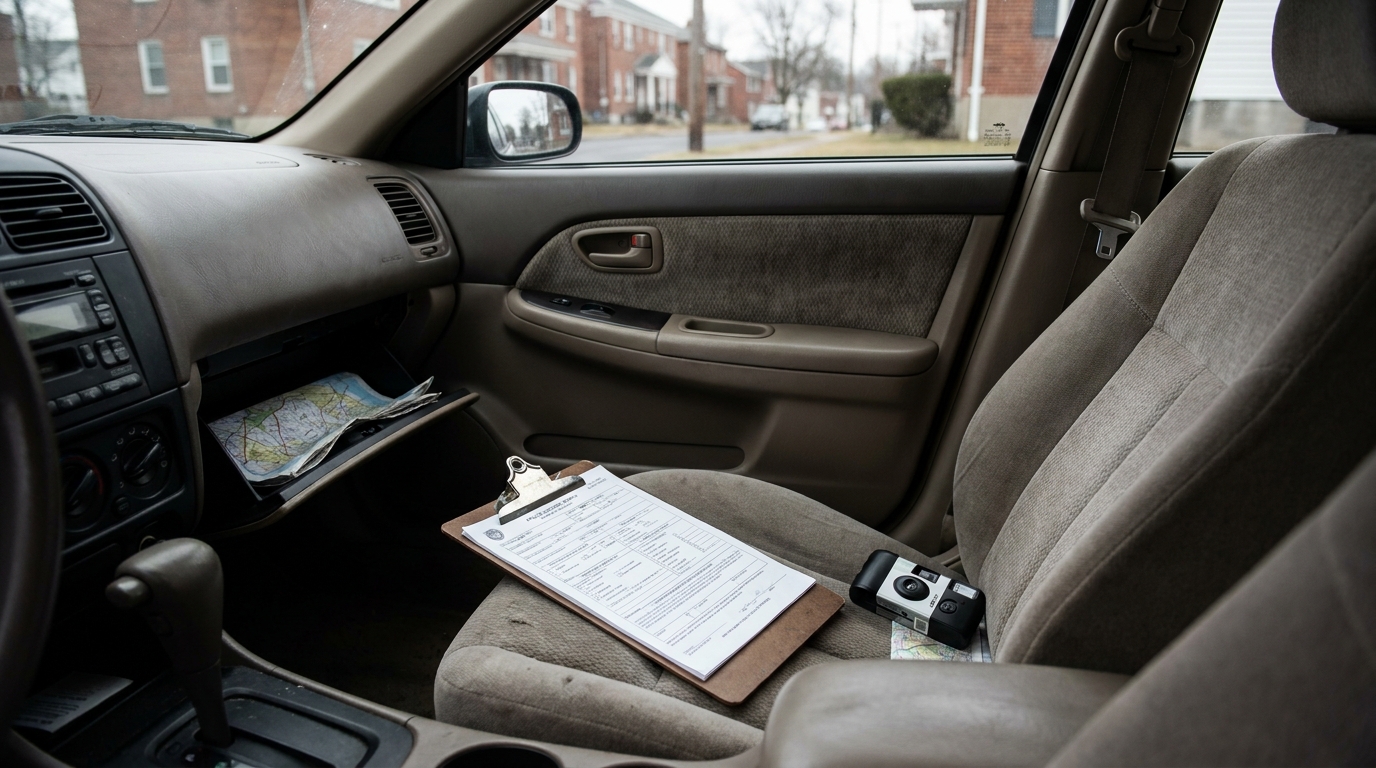
The Four Elements You Must Establish to Win
Every negligence claim in New York rests on four connected elements that you, the plaintiff, carry the burden to prove. Under common law negligence, the plaintiff must show a duty owed by the defendant, a breach of that duty, that the breach was a proximate cause of the plaintiff’s injury, and resulting damages.
Duty and breach are usually the most contested elements in a car crash case. Every driver owes others on the road a duty to operate their vehicle reasonably and obey traffic laws. When a driver runs a red light, speeds, or fails to yield, that conduct generally breaches the duty owed to everyone nearby.
Causation has two parts that often trip up unrepresented claimants. You must show both that the breach actually caused the collision (cause-in-fact) and that your injuries were a foreseeable result (proximate cause). New York courts analyze proximate cause through the lens of foreseeability, asking whether the harm was a reasonably anticipated consequence of the driver’s conduct.
💡 Pro Tip: Document your injuries with consistent medical treatment from day one. Gaps in care give insurers an opening to argue your injuries were minor or unrelated.
Why Damages Matter in Serious-Injury Claims
Damages are not just a number at the end of a case; they are an element you must prove. In auto cases governed by New York’s no-fault framework, recovery for pain and suffering generally requires meeting the serious injury threshold under Insurance Law § 5102(d). That definition includes categories such as a fracture, significant disfigurement, and a permanent consequential limitation of use of a body organ or member.
Medical records, imaging, and treating-physician opinions help establish both causation and the severity of your injuries. For an overview of how these principles fit together, our discussion of negligence and New York State law offers helpful context.
How a Traffic Law Violation Can Establish Fault
A violation of the New York Vehicle and Traffic Law can establish negligence automatically through negligence per se. An unexcused violation of the Vehicle and Traffic Law constitutes negligence as a matter of law, citing Simon v Rent-A-Center East, Inc., 180 AD3d 1100 (2d Dept 2020). This rule applies to violations of state statutes; violation of a mere administrative rule or municipal ordinance is generally only some evidence of negligence. When a driver breaks a clearly applicable traffic statute and that violation causes your injury, the duty and breach elements may be conclusively established.
Negligence per se does not apply to every statutory violation, however. Courts apply a narrow test. Negligence per se generally requires that the violation causes the injury, the plaintiff is a member of the class intended to be benefited by the statute, and the statute is intended to protect against the very hazard that caused the plaintiff’s injury.
Crosswalk cases illustrate how this doctrine helps injured plaintiffs. New York courts have recognized that a driver has a duty to yield the right-of-way to pedestrians lawfully crossing within a crosswalk and to see what there is to be seen through proper use of one’s senses, and failure to do so constitutes negligence per se. A driver claiming they simply didn’t see the pedestrian generally cannot use that as a defense.
💡 Pro Tip: Request the police accident report quickly and review it for noted traffic violations. A documented citation can be powerful evidence of car crash fault in Albany NY.
Working With a Car Accident Lawyer Albany Residents Trust
A car accident lawyer Albany injury victims rely on does far more than file paperwork; they build the proof structure your claim depends on. In practice, that work begins with preserving evidence before it disappears. Skid marks fade, surveillance footage gets overwritten, and witness memories blur, so early action often shapes the outcome.
Insurers frequently dispute liability or argue that you contributed to the crash. An experienced advocate anticipates these arguments and gathers the documentation needed to counter them.
The types of evidence that tend to move a case forward include:
- Police reports and any traffic citations issued at the scene
- Photographs of vehicle damage, roadway conditions, and visible injuries
- Eyewitness statements and contact information
- Medical records establishing the nature and extent of your injuries
- Surveillance, dashcam, or traffic-camera footage when available
For deeper guidance on auto and motorcycle matters, our team’s resources for an Albany auto accident attorney explain how these cases are handled.
💡 Pro Tip: Avoid giving a recorded statement to the other driver’s insurer before speaking with counsel. Casual answers are frequently used later to argue comparative fault.
How Shared Fault Affects Your Recovery in New York
New York applies a pure comparative negligence rule, which means sharing some blame does not bar your recovery. Instead, your damages are reduced in proportion to your assigned share of fault. CPLR § 1411 provides that contributory negligence or assumption of risk shall not bar recovery, but damages otherwise recoverable shall be diminished in the proportion which the culpable conduct attributable to the claimant bears to the culpable conduct which caused the damages.
This rule is generous to plaintiffs compared with many other states. Under New York’s pure comparative negligence rule, even a plaintiff found mostly at fault may still recover the portion of damages attributable to the other driver.
Importantly, the defendant carries the burden of proving your comparative fault. The burden of proof on the issue of comparative negligence is upon the defendant, citing Rodriguez v City of New York, 31 NY3d 312 (2018).
How a Fault Percentage Plays Out
The table below shows how comparative negligence reduces, rather than eliminates, recovery.
| Defendant’s Fault | Plaintiff’s Fault | Plaintiff’s Recovery |
|---|---|---|
| 100% | 0% | Full damages |
| 80% | 20% | 80% of damages |
| 60% | 40% | 60% of damages |
These percentages are determined by the finder of fact based on specific evidence. Outcomes depend heavily on the facts and how persuasively each side presents its proof.
Deadlines That Can Make or Break Your Claim
In most Albany car accident cases, you generally have three years from the date of the crash to file a personal injury lawsuit. That deadline comes from CPLR § 214(5). Missing it can permanently bar your claim.
A shorter and stricter deadline applies when a government vehicle or agency is involved. You are generally required to serve a Notice of Claim within 90 days of the incident, and the lawsuit itself must typically be filed within one year and 90 days. Failing to serve a timely Notice of Claim can bar your claim even before the suit deadline arrives.
These government deadlines are separate from the standard civil limitations period and do not extend automatically. Because the three-year filing deadline and the shorter municipal deadline operate so differently, confirming which one applies early is critical.
💡 Pro Tip: If any vehicle involved looks like a city, county, or transit vehicle, treat the deadline as urgent. The Notice of Claim requirement can arrive long before the standard limitations period.
Frequently Asked Questions
1. What is the most important evidence for proving fault in a car wreck in NY?
The most persuasive evidence generally ties a traffic violation directly to your injuries. Police reports, citations, photographs, witness statements, and any available video footage all help. A documented Vehicle and Traffic Law violation can establish negligence as a matter of law.
2. Can I still recover damages if I was partly at fault for the Albany crash?
Yes. New York’s pure comparative negligence system reduces your recovery by your percentage of fault but does not bar it, even if you were mostly at fault. The other side bears the burden of proving your share of fault.
3. How long do I have to file a negligence claim in Albany?
Generally three years from the date of the accident under CPLR § 214(5). If a government entity is involved, a Notice of Claim within 90 days and a one-year-and-90-day suit deadline may apply instead.
4. Does negligence per se guarantee that I win my case?
No. Negligence per se can establish duty and breach, but you still must prove causation and damages. The statute violated must also be intended to protect against the specific hazard that injured you.
5. Why does the serious injury threshold matter in a car accident negligence claim?
Because New York’s no-fault framework generally limits pain-and-suffering recovery to those with qualifying serious injuries. Conditions such as a fracture, significant disfigurement, or permanent limitations may meet the threshold.
Protecting Your Right to Full Recovery
Proving negligence after an Albany car accident comes down to connecting a careless or unlawful driving act to the serious harm you suffered. When you can show duty, breach, causation, and damages, and tie them to a traffic law violation, you build a claim that can withstand insurer pushback and comparative-fault arguments.
You do not have to navigate New York’s negligence and no-fault rules alone. Hacker Murphy is recognized for handling serious car accident negligence claims for clients in Albany and surrounding counties. Call us today at 518-274-5820, visit Hacker Murphy to learn more, or request your consultation to discuss how we can help you pursue full and fair compensation.