
Proving a Serious Injury After an Albany Car Crash
Building a serious injury case after an Albany car crash starts with proof, and that proof has to be in place early. New York’s no-fault system bars many injured people from recovering for pain and suffering unless they meet the state’s serious injury threshold. That makes the medical record, the accident evidence, and the filing timeline decisive. Hacker Murphy has served car accident victims in Albany, Schenectady, Troy, Saratoga Springs, and across Upstate New York for decades. We document a fracture, herniated disc, surgery, nerve damage, or permanent limitation so that it meets the legal standard under N.Y. Insurance Law § 5102(d).
If a crash put you in the hospital, on an operating table, or out of work, you should not have to assemble this proof by yourself. Hacker Murphy can review your injuries, your records, and your deadlines. Call 518-274-5820 or contact us now to schedule a free consultation.
Why the Serious Injury Threshold Shapes Every Albany Crash Case
The serious injury threshold decides whether you can pursue compensation for pain, suffering, and lost quality of life. Under N.Y. Insurance Law § 5104(a), when a negligence lawsuit is between covered persons, the injured person cannot recover non-economic loss without a serious injury. They also cannot recover basic economic loss, because no-fault pays that instead. Economic loss above basic economic loss, such as lost earnings beyond the no-fault limits, can still be pursued without meeting the threshold.
The legislature defined “serious injury” in eight categories for actions and proceedings commenced in Albany, New York on or after May 26, 2026, and the categories carry different weight in practice. Part EE of Chapter 58 of the Laws of 2026 removed the former ninth category, the 90/180-day non-permanent injury provision, from N.Y. Insurance Law § 5102(d) for cases filed on or after that date; lawsuits commenced before May 26, 2026 still proceed under the prior nine-category version of the statute. The New York serious injury statute includes these categories:
-
Death, dismemberment, or significant disfigurement
-
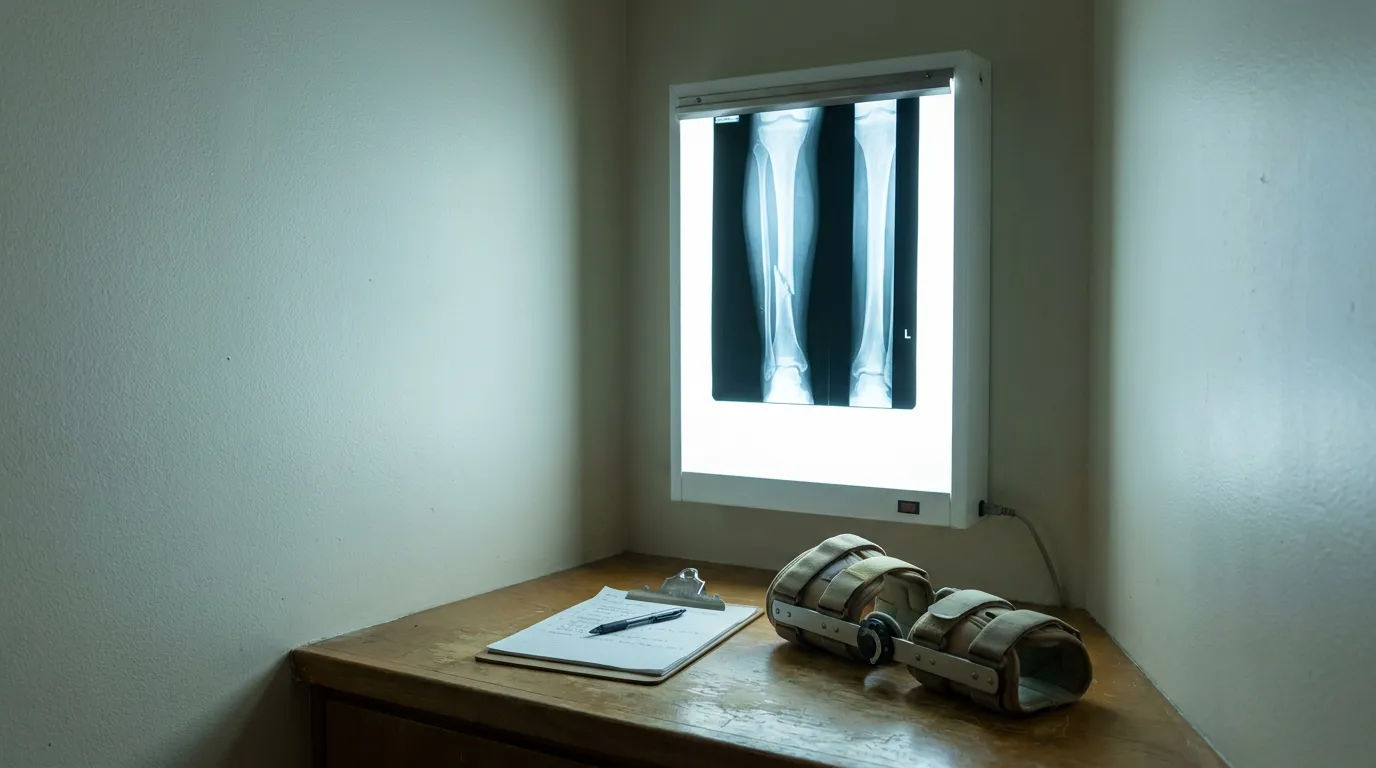
A fracture, or loss of a fetus
-
Permanent loss of use of a body organ, member, function, or system
-
Permanent consequential limitation of use of a body organ or member
-
Significant limitation of use of a body function or system
For cases commenced before May 26, 2026, the statute also covers a medically determined non-permanent injury that prevents a person from performing substantially all of their usual daily activities for at least 90 of the 180 days right after the accident. A fracture qualifies as its own category, so these claims often clear the threshold most directly. Limitation-based injuries such as disc herniations, torn ligaments, and nerve damage are different. Insurers routinely dispute them, so the medical proof has to be built deliberately. For a fuller breakdown, see our guide on injuries meeting the NY threshold.
💡 Pro Tip: Ask every treating provider to record specific functional limits, such as range-of-motion measurements or lifting restrictions. Vague notes like “patient improving” are the kind of language insurers tend to quote back against you.
How Hacker Murphy Builds the Case, Step by Step
Our case-building follows a deliberate order: preserve the evidence, prove fault, document the injury, and protect the deadline. A gap at any one stage can weaken an otherwise strong claim.
Step One: Locking Down Crash Evidence Before It Disappears
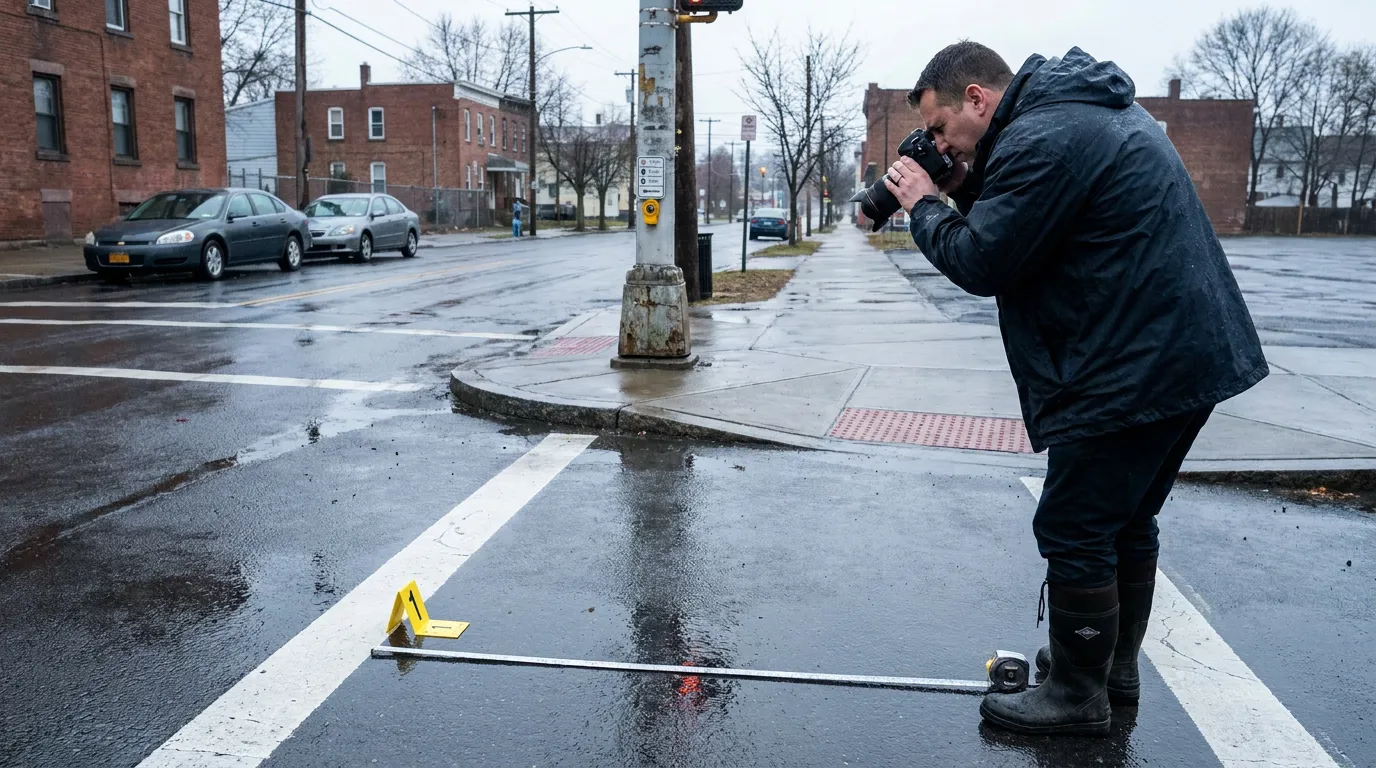
Physical and witness evidence starts degrading within days of a collision. Skid marks fade, surveillance footage from businesses along Central Avenue or Washington Avenue may be overwritten, and witnesses’ memories blur. Our attorneys move quickly to get witness statements, examine vehicles, preserve debris, and document the crash site. When the facts call for it, we bring in outside accident reconstruction experts and investigators.
Step Two: Proving Negligence and Causation
Liability evidence and injury evidence have to connect. We gather police reports, witness statements, and photographs to establish fault. We then work with medical professionals to link the specific mechanism of the crash to the specific injury. Insurers frequently argue that a spinal injury is “degenerative” or pre-existing, so causation testimony from qualified physicians often makes the difference.
Step Three: Turning Medical Treatment Into Legal Proof
Medical bills you cannot recover directly can still help prove how serious your injury is. Under N.Y. Insurance Law § 5104(c), basic economic loss may still be pleaded and proved when it is relevant to non-economic loss. Treatment history, surgical records, and therapy notes can show a jury how far your life changed after the crash. We organize these records into a timeline that answers the insurer’s arguments before they are made.
💡 Pro Tip: Keep a simple daily journal of pain levels, missed events, and tasks you can no longer do. It can help refresh your memory at a deposition years later.
Herniated Disc Car Accident New York Claims: Where Cases Stall
A herniated disc can qualify as a serious injury, but it is not named in the statute. These claims are usually argued under the “permanent consequential limitation” or “significant limitation of use of a body function or system” categories in N.Y. Insurance Law § 5102(d). Courts require objective medical evidence of a limitation that is more than minor, mild, or slight. The permanent consequential category also requires proof that the limitation is permanent.
In our experience, disc cases tend to stall at the defense medical examination. The insurer’s doctor may find “full range of motion” or attribute the herniation to age. We answer with objective imaging, quantified range-of-motion testing from treating physicians, and records explaining any gaps in treatment. If surgery such as a discectomy or fusion followed, those operative records often carry significant weight.
💡 Pro Tip: Do not stop treatment without discussing it with your doctor first. Unexplained gaps in care are among the most common arguments insurers raise against disc injury claims.
No-Fault Benefits, Liens, and Lost Wages While Your Case Builds
No-fault benefits generally cover your immediate losses while the injury claim develops. Under N.Y. Insurance Law § 5102(a)(1), basic economic loss covers up to $50,000 per person in combined benefits, including medical, hospital, surgical, nursing, prescription, and prosthetic expenses, along with psychiatric care and physical and occupational therapy when referred. Under § 5102(a)(2)-(3), lost earnings are covered at 80% of earnings, up to $2,000 per month, for up to three years. Other reasonable and necessary expenses are covered up to $25 per day for up to one year. All of these benefits count toward the $50,000 total.
For seriously injured workers, those caps often fall well short of actual losses. Surgery and long-term rehabilitation can exhaust $50,000 quickly. Economic losses above the no-fault limits may be claimed against the at-fault driver even without a serious injury, but threshold proof is still required to recover for pain and suffering.
Liens can also affect settlement decisions. Under N.Y. Insurance Law § 5104(b), in an action against a non-covered person, the insurer that paid first-party benefits has a lien on the recovery. In that kind of action, the covered person cannot settle without the insurer’s written consent or court approval unless the settlement exceeds $50,000. This lien generally does not apply when the at-fault driver is also a covered person. We handle these insurance communications and filings so a lien does not derail your resolution.
Deadlines That Can End a Claim Before It Starts
New York generally gives car accident victims three years from the date of injury to file a personal injury lawsuit. That rule comes from the CPLR personal injury deadline, CPLR § 214(5), subject to exceptions in other sections. Claims filed late may be dismissed as untimely.
Claims involving government entities follow much shorter timelines. If a crash involves a municipal vehicle, a city plow, or a roadway defect in Albany, a Notice of Claim is generally required within 90 days under General Municipal Law § 50-e. The lawsuit itself generally must be filed within one year and 90 days. Claims against New York State go through the Court of Claims and have their own deadlines. Missing any of these deadlines can bar recovery.
💡 Pro Tip: If a government vehicle or a dangerous road condition was involved, treat the 90-day notice window as your real deadline and seek legal guidance immediately.
What Hacker Murphy’s Recognition Means for Your Case
Recognition matters because it reflects a track record with the kinds of cases you are facing. Hacker Murphy describes its award-winning team as recognized among leading personal injury law firms in Upstate New York, and as recognized for handling serious car accident negligence claims for clients in Albany and the surrounding counties. That means working with attorneys who have seen how insurers defend threshold cases and know where those defenses tend to break down.
Longevity is another form of proof. For 128 years, our firm has handled cases in the same Capital Region courts and communities where our clients live and work. Over decades of personal injury litigation, including wrongful death lawsuits, we have regularly seen head trauma, spinal cord injuries, and broken limbs.
Why You Should Choose Hacker Murphy
Choosing a firm comes down to experience, resources, and accessibility. Hacker Murphy has handled rollovers, dram shop cases, pedestrian and crosswalk injuries, New York State Thruway crashes, and head-on collisions. We work with accident reconstructionists and medical professionals, negotiate with insurers, and take cases to court when needed. Our Albany car accident attorneys handle these cases on a contingency basis.
We also make it practical to get help. We have offices in Albany, Schenectady, Troy, and Saratoga Springs. Our attorneys can be reached by phone around the clock, including holidays.
Frequently Asked Questions
Common Questions About Serious Injury Car Accident Cases in Albany, New York
1. Does a broken bone automatically meet New York’s serious injury threshold?
A fracture is listed as its own serious injury category under N.Y. Insurance Law § 5102(d). That generally makes fracture claims more direct than limitation-based claims. You still have to prove negligence and that the crash caused the fracture.
2. Can I sue for a herniated disc after an Albany car accident?
You may be able to, if the medical evidence shows a qualifying limitation. Disc injuries are usually argued under the permanent consequential limitation or significant limitation categories. Courts require objective medical proof of a limitation that is more than minor.
3. How long do I have to file a car accident lawsuit in New York?
Generally, three years from the date of injury under CPLR § 214(5). Shorter deadlines apply in some situations. For example, claims against a municipality generally require a Notice of Claim within 90 days and a lawsuit within one year and 90 days.
4. Will my no-fault insurer take part of my settlement?
It may. Under N.Y. Insurance Law § 5104(b), an insurer that paid first-party benefits has a lien in an action against a non-covered person. In that kind of action, the insurer’s consent or court approval is required for settlements of $50,000 or less.
5. What should I bring to my first consultation?
Bring your police report, medical records, imaging results, insurance correspondence, and proof of missed work, if you have them. If you do not have these documents yet, our team can help gather them.
Protecting Your Recovery Starts With the Record You Build Now
A serious injury claim in New York is won or lost on proof, and that proof needs to be gathered while the evidence still exists. Hacker Murphy brings more than a century of Capital Region experience to that work.
If you were seriously hurt in an Albany-area crash, let us start building your case today. Reach out to Hacker Murphy, call 518-274-5820, or schedule your free consultation to talk with our team about your next steps.
Disclaimer: This content is for informational purposes only and is not legal advice. Every case is unique, and results may vary. Consult an attorney about your specific circumstances.